
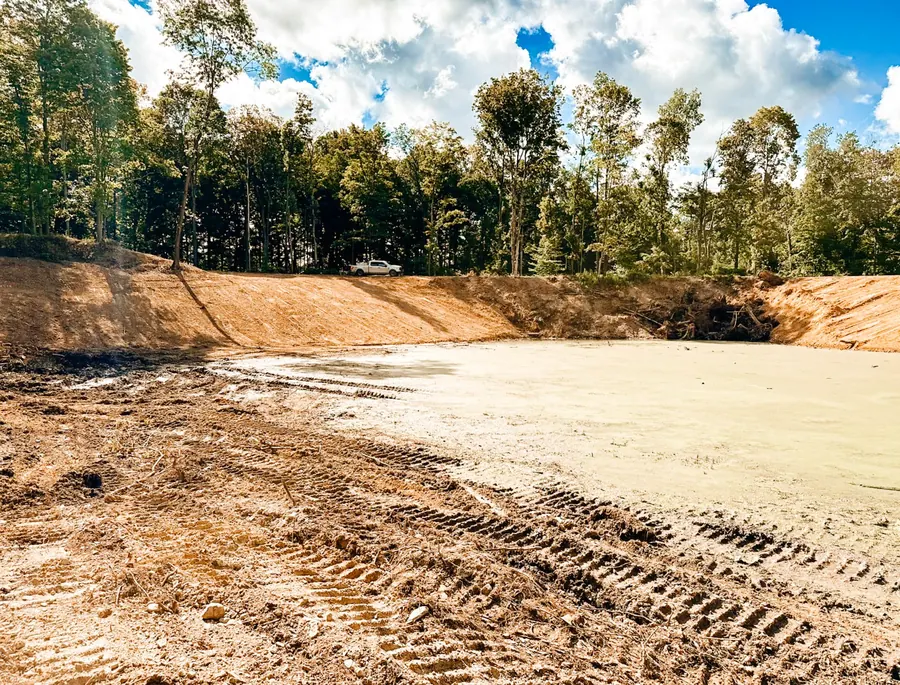
Pond Digging & Pond Excavation in Northeast Ohio
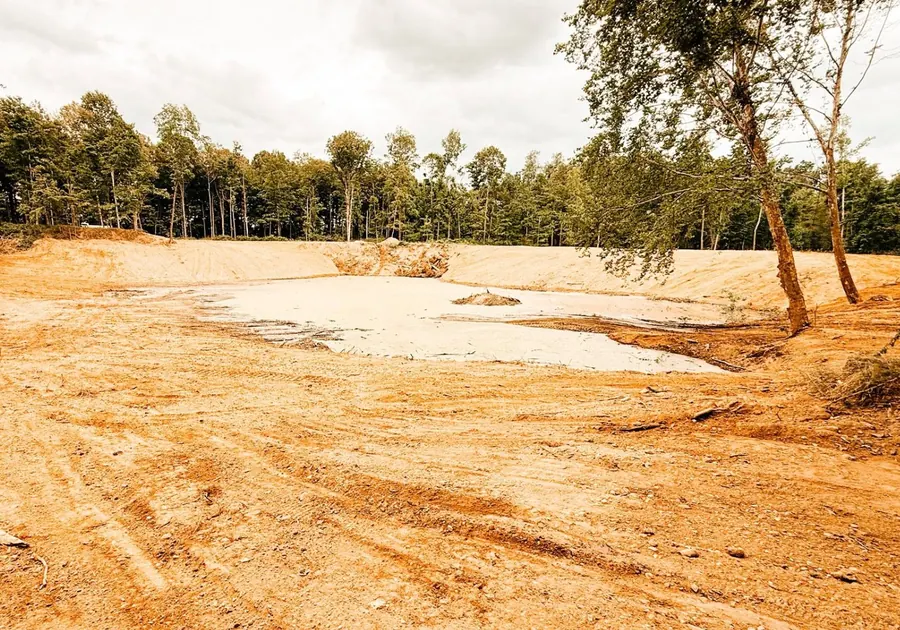
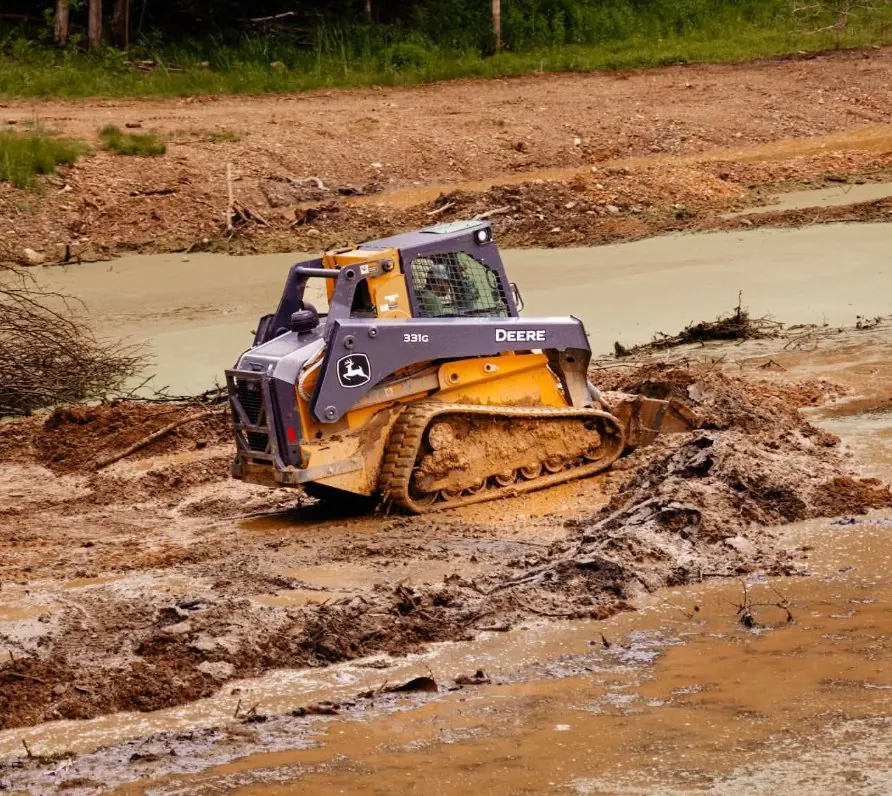
A good pond starts with the right spot and the right dirt. Logan Earthworks digs new ponds, reshapes worn banks and reworks old ponds across northeast Ohio with tracked excavators, a dozer and a compact track loader.
Pond Digging, Start to Finish
You have a low corner that stays wet, a spring seep the cattle have churned to soup, or a spot behind the house where you have always pictured water. Digging the hole is the easy part. Getting it to fill, hold and stay put is the part that takes thought. Much of northeast Ohio sits on glacial till with plenty of clay in it, which is good news for ponds. But clay is not everywhere, and it is not always deep enough. So we look at the ground before we talk about size.
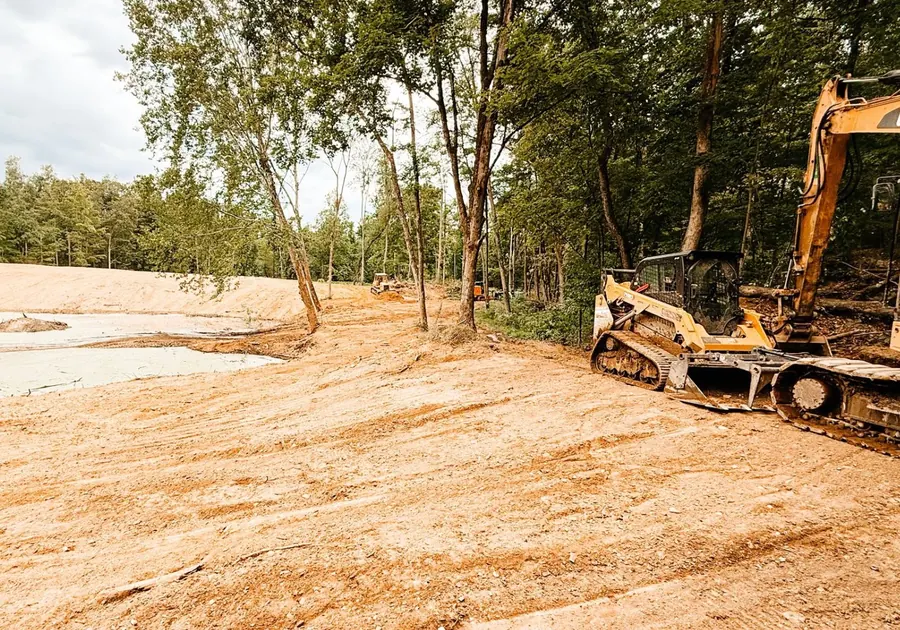
Jeff looks at the site with you: where the water will come from, where the overflow will go and what the subsoil is likely to be. Ask about test holes before anyone settles on a size. The work itself is excavation. Topsoil is stripped and stockpiled, the basin is dug, and the banks are shaped to a slope you can walk and mow. Where the spoil goes gets settled in the estimate. Take dam and spillway design questions to your county conservation office or an engineer first, and we dig to the plan.
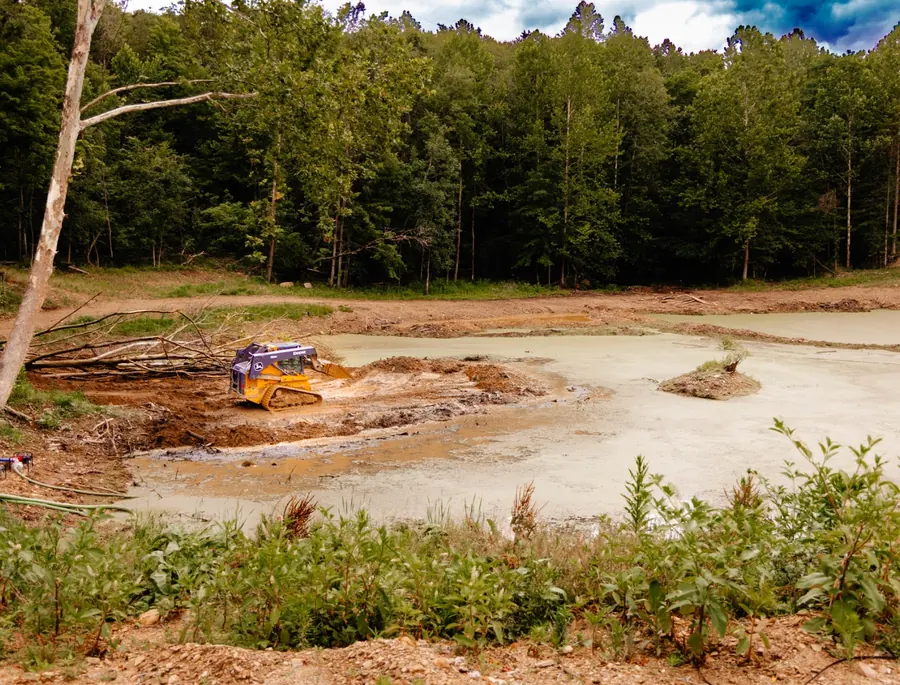
Older ponds need work too. Banks slump, cattails close in from the shallow edge, and the overflow washes out. We reshape banks with the compact track loader and dozer, pull the edge back to firm ground, and regrade around the water so runoff comes in slow. It is one part of our excavation work. Before you settle on a spot, read our guide to Ohio pond permits and siting, then call Jeff at (330) 625-5754.
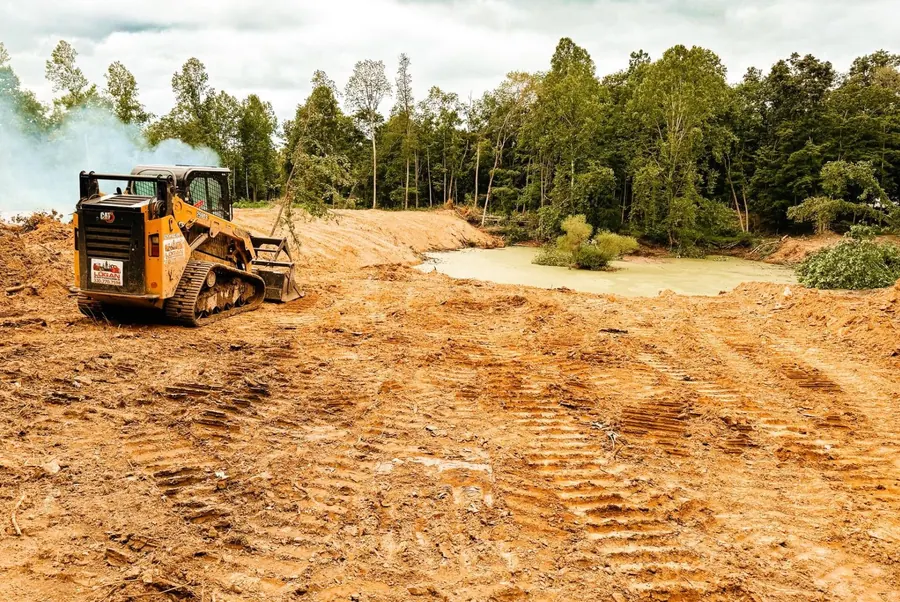
What Our Pond Work Covers
- New farm, yard and wildlife ponds dug
- Pond sites looked at before any digging
- Pond banks reshaped to a mowable slope
- Pond edges and overflow areas graded
- Old, silted and overgrown ponds reworked
- Spoil spread, graded and ready to seed
Picking a spot that will hold water
The Ohio Pond Management Handbook from the Ohio DNR Division of Wildlife says pond soil should be at least 20 percent clay to keep seepage down, and that a one acre pond generally wants 10 to 15 acres of land draining to it. Too little watershed and the pond drops every summer. Too much and every storm tries to tear out the spillway. The same handbook tells pond builders to get advice from the county Soil and Water Conservation District and the USDA Natural Resources Conservation Service before digging. We agree. Those offices have the soil maps. Test holes on your own ground then settle the question.
Depth, bank slope and where the dirt goes
For a fishing pond, the state handbook calls for 8 feet or more of depth across at least a quarter of the basin, and banks that drop about one foot for every three feet out along most of the shore. Banks cut that way hold their shape, keep weeds from taking the whole edge, and let a person climb back out. Every bucket of dirt we dig has to go somewhere, and that is the thing people forget. Plan the spoil first: spread across a field, or onto a spot you want raised. Moving dirt once is what keeps a pond job sensible.
Permits, dams and who to ask first
Pond rules mostly turn on the dam. The Ohio DNR Division of Water Resources runs the state Dam Safety Program. Its fact sheet lists three kinds of dams as exempt from its construction permit: dams 6 feet or less in height, dams under 10 feet that store 50 acre-feet or less, and dams of any height that store 15 acre-feet or less. It also says no dam should be started until the owner has a permit or an exemption in hand, so call them about yours. Your county Soil and Water Conservation District and your zoning office may have their own say. In Trumbull County the district office is in Cortland. Check before any digging starts.
Do I need a permit to dig a pond on my own land in northeast Ohio?
It depends on the dam, the size and the spot. The Ohio DNR Dam Safety Program decides whether a dam needs a state construction permit or qualifies for an exemption, and it wants that settled before work starts. Your county Soil and Water Conservation District and your township or county zoning office may have rules too. Ask all three first. Our pond permit guide lists who to call.
What decides how much it costs to have a pond dug?
The amount of dirt and how far it has to move. A bigger, deeper pond means more digging. Spoil that can be spread next to the pond costs less to handle than spoil that has to travel across the property. Trees to clear, wet ground, a long dam, poor clay and tight access all add time. Jeff looks at the site and gives you a free estimate.
How do you know a pond will hold water before you dig it?
Test holes dug where the pond will sit show what the subsoil is. Sticky clay that holds together is what you want. Sand, gravel seams or shale near the surface are warning signs. Your county Soil and Water Conservation District can also show you the soil map for your parcel. No one can promise a pond will hold water, but checking first avoids the worst surprises.
Can you reshape the banks or clean out a pond I already have?
Yes. Bank shaping is part of our pond work. We pull slumped banks back to firm ground, cut a steady slope, and regrade the ground around the pond. Silted ponds are reworked when the water is down and the bottom is firm enough to carry a machine. Tell us how the pond drains and we will talk through what is practical.
What is the best time of year to dig a pond in Ohio?
Dry weather. Late summer into early fall is usually when the ground is firmest and the water table is lowest, so machines can work the basin and clay packs tight instead of smearing. A pond dug then also has fall, winter and spring to fill. Wet springs are the hardest time. Call early so the site visit and any permit questions are done before the dry window.
How a Job Runs
Talk It Through
Call or send the form. Tell us where the ground is and what you want it to look like when we leave.
We Look at the Site
Jeff walks it with you: the growth, the slope, the wet spots, the way in and out for the machines.
A Straight Plan
You get a free estimate and a plain recommendation on the approach that fits the ground.
The Work Gets Done
We bring the right machine for the job and do the work the way we said we would.
Clean and Ready
We leave the site cleaned up and ready for the next step, whatever that is for you.
Pond Digging Near You
Based in Farmdale, in Trumbull County, Ohio. Pick your town, or call and ask if we cover it.
Excavation pages for your town
More services
Excavation
Foundation digs, building sites, utility trenches, ponds and general earthmoving.
DetailsUtility Trenching
Trenches dug for water, sewer, electric and drain lines, then backfilled and graded.
DetailsSite Prep
Clearing, stripping, rough grading and building pads so your builder can start.
DetailsNeed Pond Digging?
Call Jeff or send a few details. Estimates are free, and you get a straight answer on what the job takes.