
Hazard Tree Removal in Northeast Ohio & Western Pennsylvania
Dead, leaning, storm-damaged and oversized trees taken down with heavy equipment before they come down on their own. Owner-operated, based in Trumbull County, with free estimates.
Hazard Trees, Start to Finish
You already know which tree it is. The ash that has been bare for three summers and drops limbs on the lane. The big maple with the split down the trunk, leaning a little more toward the garage every season. The pine the last windstorm left hung up in its neighbor. A tree like that is going to come down. The only open questions are when, which way, and what will be under it. Taking it down on purpose, on a calm day, is the controlled version of that story.
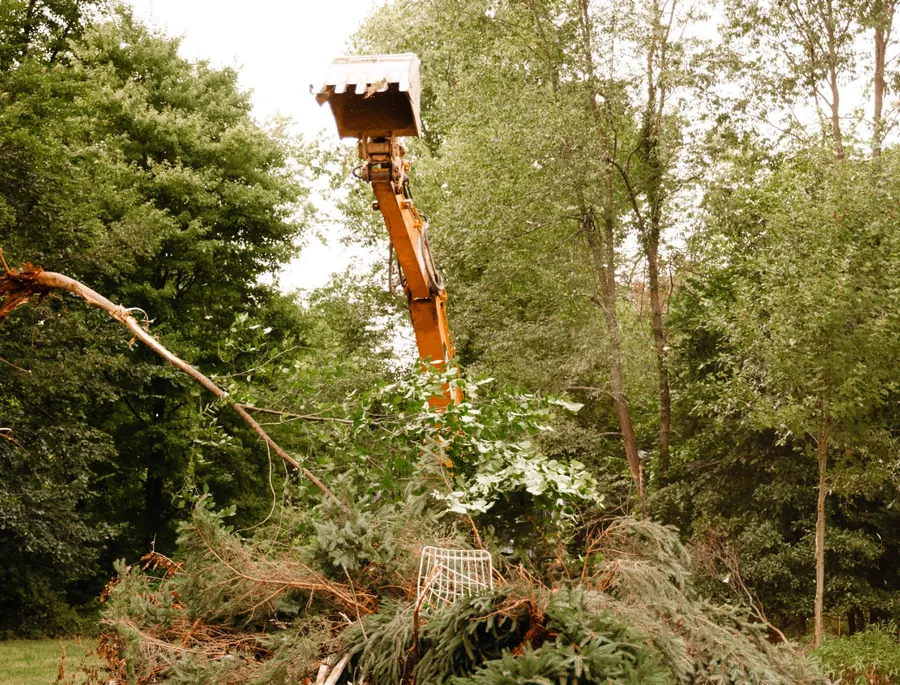
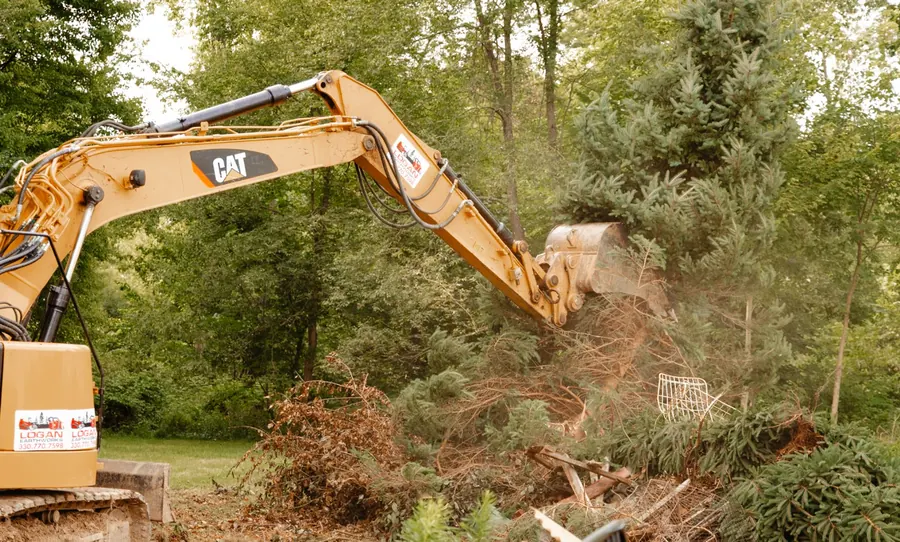
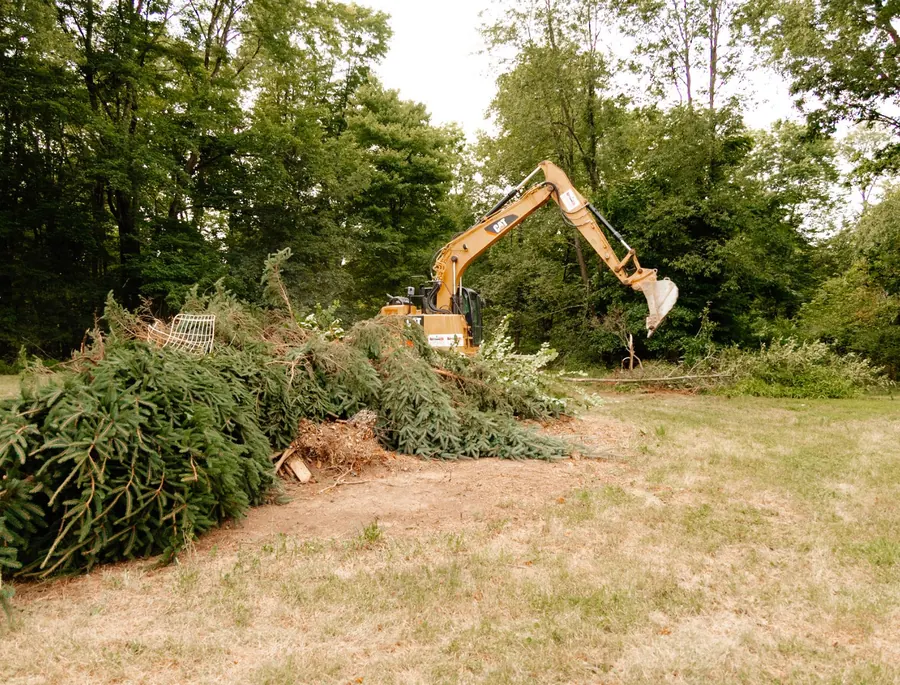
Logan Earthworks removes hazard trees for homeowners, farmers, landowners, businesses and municipalities across northeastern and eastern Ohio and western Pennsylvania, from our base in Farmdale in Trumbull County. We take trees down with heavy equipment. A CAT excavator can push, pull and steer a tree as it falls and then pick the trunk up and stack it, which keeps people out from under dead wood. Wherever a machine can reach, that is a far safer way to handle brittle and unstable trees than sending someone up into them.
Our tree work is removal with machines. We take down trees that have become a danger, deal with the trunk and brush, and grind or dig the stump if you want it gone. Jeff, the owner, looks at each tree and its surroundings first: the lean, the weight in the crown, what sits under it and how a machine gets to it. Wondering if your tree is one we can help with? Send a photo or reach out, and he will talk it through with you.
Hazard Trees We Take Down
- Dead tree removal, including dead ash
- Leaning tree removal near buildings and lanes
- Storm-damaged and hung-up tree removal
- Dangerous tree removal along drives and trails
- Large tree removal with heavy equipment
- Property safety tree removal for landowners
Dead and Dying Trees, Ash Above All
The emerald ash borer has killed ash trees across Ohio and Pennsylvania, and dead ash is some of the most treacherous wood there is. It dries out and turns brittle, tops and limbs snap without warning, and the trunk can break as it is being cut. Standing dead ash only gets more dangerous with each season it is left. We also remove dead and declining oak, maple, cherry, elm and pine. Signs to watch for: bark falling off in sheets, no leaves in summer, mushrooms or conks on the trunk, heavy woodpecker damage, and big dead limbs in the crown.
Leaning, Split and Storm-Damaged Trees
A tree that has always leaned is often fine. A tree that has started to lean, with soil heaving or cracking on the side away from the lean, is on its way over. Trunks split at a fork, trees with a cavity at the base, and trees left half uprooted or hung up in another tree after a storm are all loaded with tension and can move in ways that are hard to predict. Those are jobs for a machine, not a ladder and a chainsaw. After a storm, call and we will tell you how soon we can get there.
How We Take a Hazard Tree Down
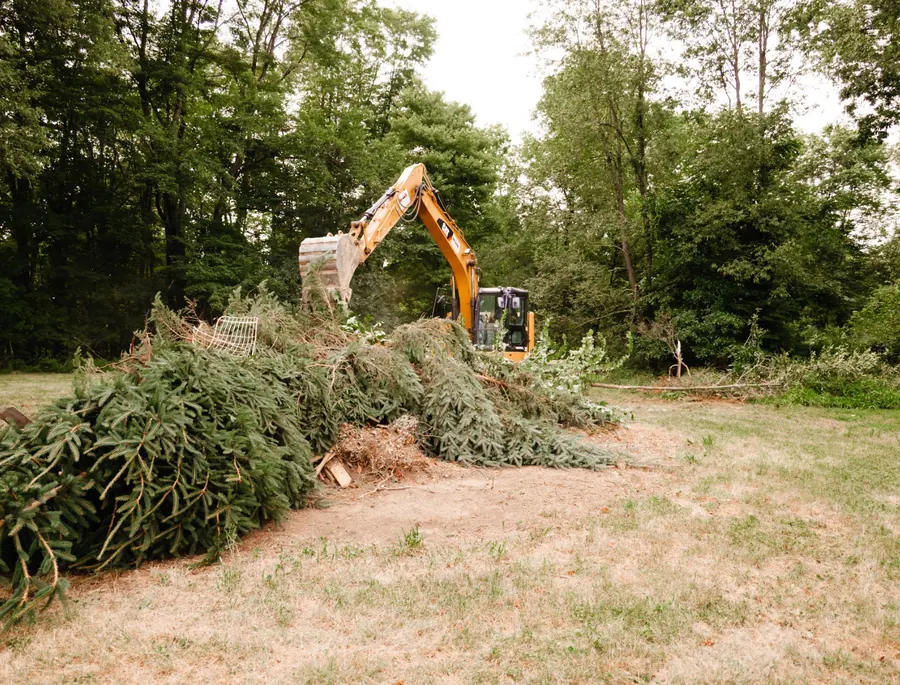
We start with where it can land. That means checking the lean, the weight of the crown, the wind and what is inside the fall zone: buildings, fences, wires, the leach field, the neighbor's property. Where there is room, the tree is brought down whole with the excavator controlling the direction. The trunk is then cut up and stacked, or left in lengths for your firewood, and the brush is piled or run through the forestry mulcher. Anything near overhead power lines is the electric utility's call first, so contact them before any work near a live line.
Stumps, Cleanup and Clearing Several at Once
Decide up front what you want left. Options run from the tree on the ground and nothing more, to the trunk stacked, the brush handled and the stump gone. We can follow with stump grinding so you can mow over the spot, or dig the stump out if you are building there. If you have a whole fence row or woodlot edge of dead trees, as many ash stands now are, it usually makes more sense to treat it as a land clearing job and do them all in one trip than to pick them off one at a time.
Who is responsible for fallen tree removal in Ohio?
This is general information, not legal advice. In most cases the owner of the property where the tree lands deals with the cleanup, usually through their own homeowner's insurance, no matter whose yard the tree grew in. It can be different if the tree's owner knew it was dead or dangerous and did nothing. Talk to your insurance company, and take photos before anything is moved.
Do I need a permit to cut down a tree on my property in PA?
It depends on where you live. In Pennsylvania, tree rules are largely set by local government, so some boroughs, cities and townships have tree or shade tree ordinances and others do not. Trees along the street or in the road right-of-way are often under the municipality's control. Call your municipal office before removing a tree, and we will work to whatever it requires.
How do I know if a tree is dead or dangerous?
Look for a bare crown in summer, bark that is peeling or falling away, fungus or conks on the trunk or at the base, deep cracks, hollow spots, large dead limbs, and soil lifting at the roots of a tree that has begun to lean. Any one of those on a tree within reach of a house, lane, play area or power line is worth a look. We will come out and give you a straight opinion.
Can you remove a tree that is close to a house or power lines?
Often, yes, when there is room for the excavator to control the fall away from the building. Jeff looks at the lean, the crown and the open ground around the tree before he gives you a plan. If yours hangs over a roof or stands in a tight spot, send a photo and we will talk through how to handle it. For trees touching or close to power lines, call your electric utility first, since a live line is theirs to make safe.
Do you take down dead ash trees killed by emerald ash borer?
Yes. Dead ash is common across this region since the emerald ash borer came through. Because the wood turns brittle after the tree dies, it is safer to bring ash down with a machine than to climb it, and sooner is better than later. If you have several, we can take them all in one visit and grind the stumps afterward.
How a Job Runs
Talk It Through
Call or send the form. Tell us where the ground is and what you want it to look like when we leave.
We Look at the Site
Jeff walks it with you: the growth, the slope, the wet spots, the way in and out for the machines.
A Straight Plan
You get a free estimate and a plain recommendation on the approach that fits the ground.
The Work Gets Done
We bring the right machine for the job and do the work the way we said we would.
Clean and Ready
We leave the site cleaned up and ready for the next step, whatever that is for you.
Hazard Trees Near You
Based in Farmdale, in Trumbull County, Ohio. Pick your town, or call and ask if we cover it.
More services
Snow Removal
Long driveways, farm lanes, private roads and lots cleared with heavy equipment.
DetailsLand Clearing
Overgrown lots, fields and wooded acreage cleared and left ready to use or build on.
DetailsForestry Mulching
Brush and small trees ground into mulch in place. No piles, no burning, no hauling.
DetailsNeed Hazard Trees?
Call Jeff or send a few details. Estimates are free, and you get a straight answer on what the job takes.