

Stump Grinding in Northeast Ohio & Western Pennsylvania
One stump in the lawn or a whole cleared lot full of them, ground below ground level with a tracked machine. No digging up the yard and no crater to fill.
Stump Grinding, Start to Finish
The tree is gone but the stump is not, and it is in the way of everything. You mow around it. It sends up suckers every summer. It draws ants and grows fungus. It sits right where the shed, the fence line or the new lawn was supposed to go. Left alone, a hardwood stump takes many seasons to rot, and it does not rot evenly. Grinding ends it in one visit: the stump is chewed into chips below the surface and the spot can be filled, seeded or built past.
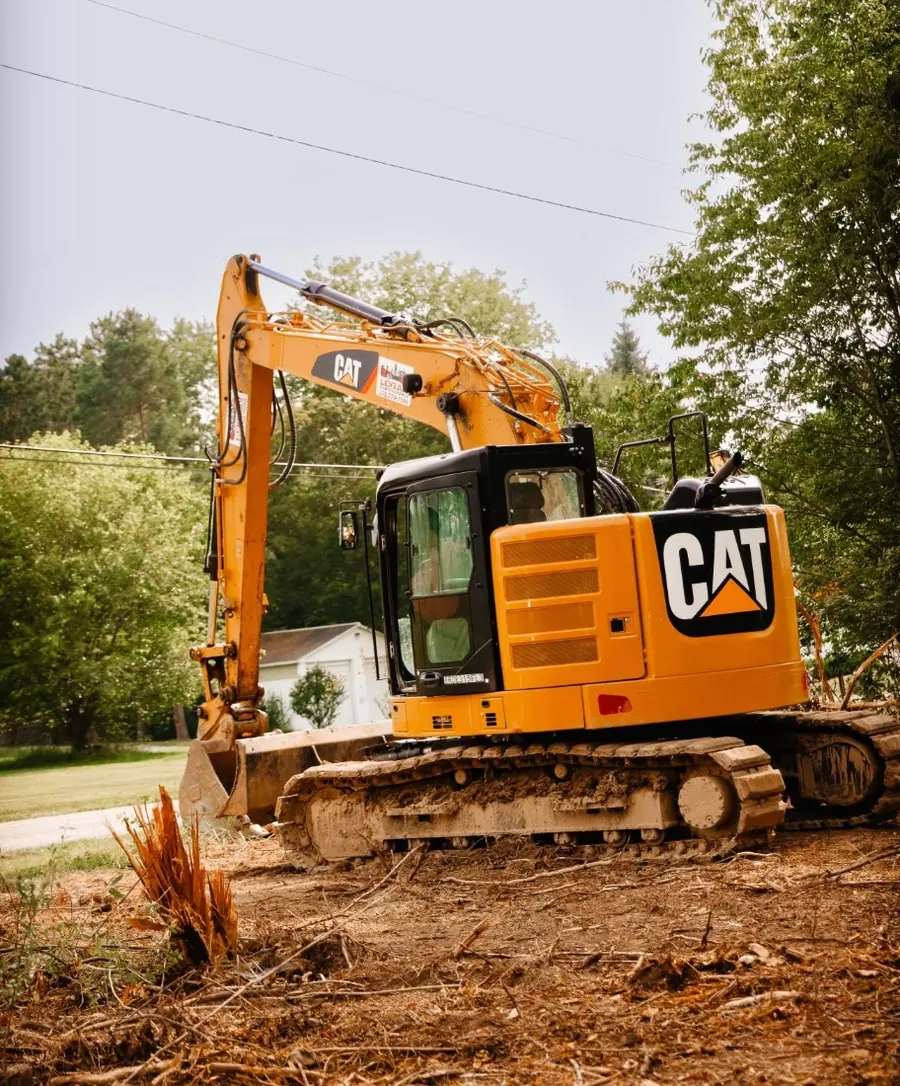
Logan Earthworks grinds stumps for homeowners, farmers, builders and commercial properties across northeastern and eastern Ohio and western Pennsylvania, from our base in Farmdale, Trumbull County. We run a stump grinding head on a tracked machine. Tracks spread the weight, which helps on lawns and soft ground, and they let us get to stumps on banks and along tree lines. It is the same owner-operated business that does our land clearing and excavation, so a stump job can be part of a bigger cleanup or stand alone.
Because we also clear land and dig, we can tell you honestly when grinding is the right tool and when it is not. Grinding is ideal for lawns, pastures, fence lines and anywhere you just need the stump gone and the surface usable. Under a foundation, a slab or a driveway base, the whole stump and root ball should come out with the excavator so nothing rots beneath the build. We do both, so you get the method the ground needs, not the only one a contractor happens to have.
Stump Grinding and Removal We Handle
- Residential stump grinding in lawns and yards
- Commercial stump removal on business properties
- Multiple stump removal after tree work
- Construction site stump clearing before building
- Landscape preparation for lawns and beds
- Property cleanup of old stumps and roots
How Stump Grinding Works
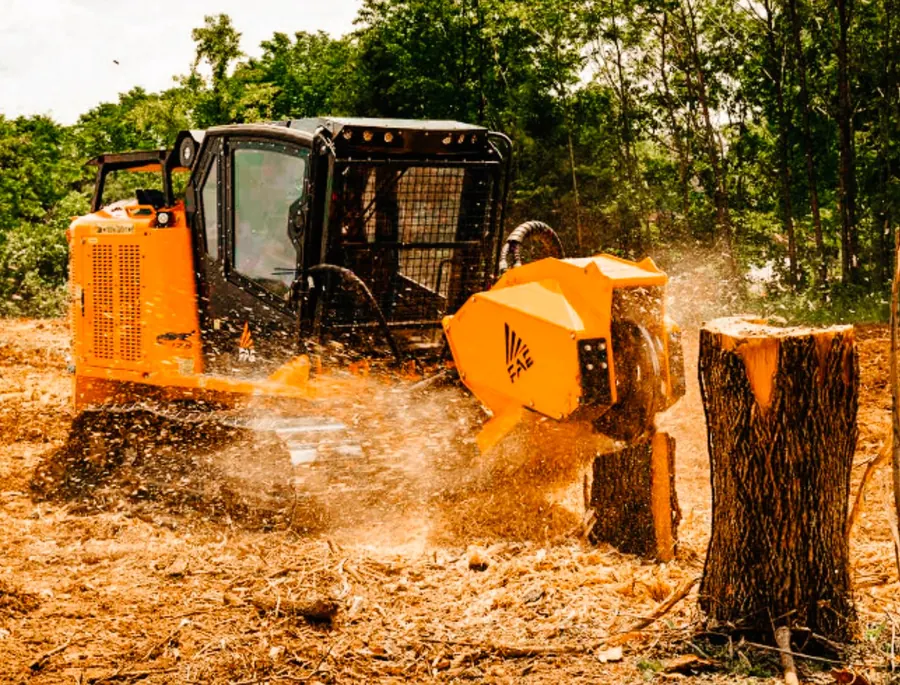
The grinding head is a heavy cutting wheel fitted with teeth. We set it on the stump and sweep it back and forth, taking the wood down a layer at a time until the stump is below ground level, then chase the big surface roots that would catch a mower. What is left is a shallow bowl filled with a mix of wood chips and soil. There is no big hole, no root ball to get rid of and far less disturbance than digging. Tell us before we start if you plan to plant a tree, pour a walk or set a post in that spot, so we can grind deeper and wider there.
Grinding Versus Digging the Stump Out
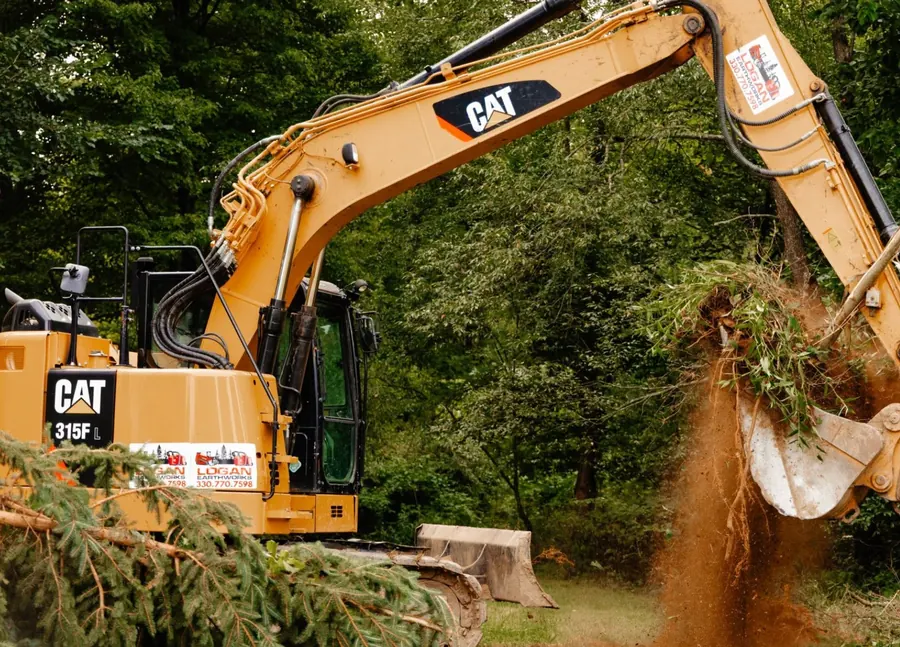
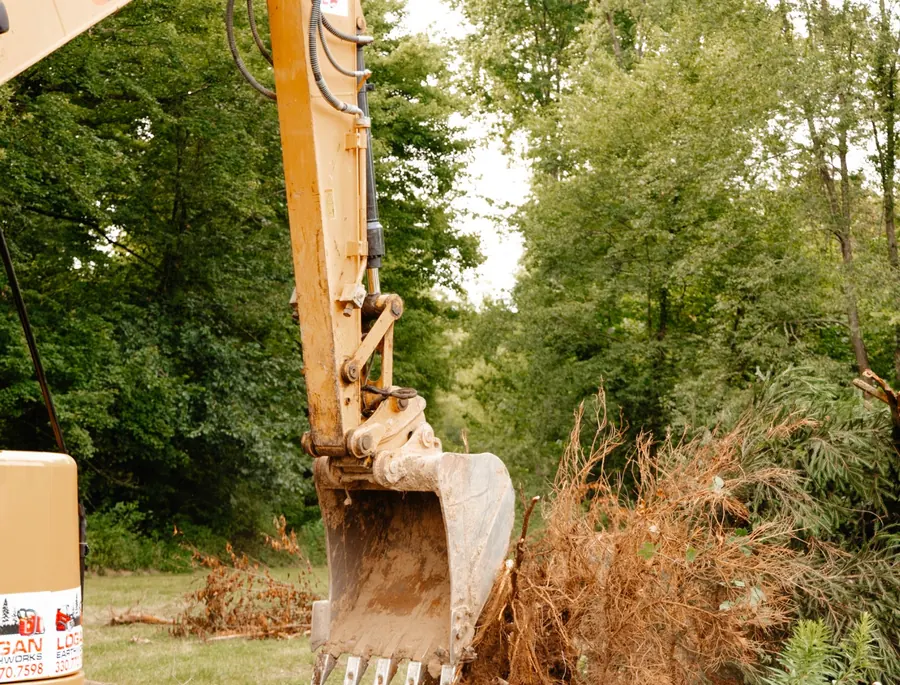
Grinding removes the stump to below the surface and leaves the deeper roots to rot in place. It is quick, tidy and right for most yards and fields. Digging removes everything: the excavator pops the stump and root ball whole, which leaves a hole to backfill and a heavy, dirty chunk of wood to deal with. It is the right call under buildings, pads and drives, and on lots being cleared for a new home. On a mixed site we often dig the stumps inside the building footprint and grind the ones in the future lawn, which keeps the mess down.
One Stump or a Whole Lot Full
A single stump by the driveway and dozens of stumps left after a timber harvest are both normal calls. Volume changes the math. Once the machine is on site, each extra stump adds little time, so it pays to have every stump on the property done in one trip. After land clearing or hazard tree removal, we can grind the stumps as part of the job so the ground is finished when we leave. Builders need stumps cleared from lots ahead of grading, and property managers have stumps along parking areas and walks.
What to Expect Before and After
Before we grind, mark anything buried near the stump: invisible dog fence, sprinkler lines, yard light wiring, drain tile. A utility locate request also has to be placed before grinding below the surface, and we sort out who places it when we look at the job. We need a path wide enough for the machine and will tell you if a gate or a tight side yard is a problem. Afterward you have a mound of chips mixed with dirt. Many owners rake it back into the hole and let it settle, then top it with soil before seeding, since fresh chips alone make a poor seedbed. If you want the chips left in a pile for garden paths or beds, just say so.
Is it better to grind a stump or remove it completely?
Grind it if the area will be lawn, pasture, planting bed or just open ground. It is faster, leaves no big hole and is the simpler job in most cases. Remove it completely if anything structural is going on top: a foundation, slab, pole barn or driveway base. Buried wood rots and the ground above it settles, which is fine under grass and a problem under concrete or stone.
How deep does stump grinding go?
Below ground level, deep enough that grass will grow over the spot and a mower will never find it. If you plan to replant a tree, set posts or run a walk or patio through the area, tell us and we will take it deeper and wider. For anything that needs the roots truly gone, digging the stump out is the better method.
What happens to the wood chips after stump grinding?
They stay on site. Most are pushed back into the hole, where they settle as they break down. The extra can be spread thin under trees, used as path or bed mulch, or left in a pile where you want it. Before seeding grass, it helps to scoop out some of the chips and replace them with soil so the seed has dirt to root in.
Will a tree grow back after the stump is ground?
The stump itself will not. Some trees, such as black locust, tree of heaven, poplar and willow, can send up sprouts from roots left in the ground. Mowing them off or cutting them as they appear usually wears the roots out. Grinding a little wider than the stump helps, so mention it if you are dealing with a tree known for suckering.
How is stump grinding priced?
By the work in front of the machine: how many stumps, how big across they are at the ground, what kind of wood, and how easy they are to reach. Hardwood stumps and stumps with wide root flares take longer. A group of stumps done in one visit comes out lower per stump than one alone. Send photos with something for scale, or have us look, and the estimate is free.
How a Job Runs
Talk It Through
Call or send the form. Tell us where the ground is and what you want it to look like when we leave.
We Look at the Site
Jeff walks it with you: the growth, the slope, the wet spots, the way in and out for the machines.
A Straight Plan
You get a free estimate and a plain recommendation on the approach that fits the ground.
The Work Gets Done
We bring the right machine for the job and do the work the way we said we would.
Clean and Ready
We leave the site cleaned up and ready for the next step, whatever that is for you.
Stump Grinding Near You
Based in Farmdale, in Trumbull County, Ohio. Pick your town, or call and ask if we cover it.
Stump Grinding pages for your town
More services
Hazard Trees
Dead, leaning and storm-damaged trees taken down before they fall on their own.
DetailsSnow Removal
Long driveways, farm lanes, private roads and lots cleared with heavy equipment.
DetailsLand Clearing
Overgrown lots, fields and wooded acreage cleared and left ready to use or build on.
DetailsNeed Stump Grinding?
Call Jeff or send a few details. Estimates are free, and you get a straight answer on what the job takes.