
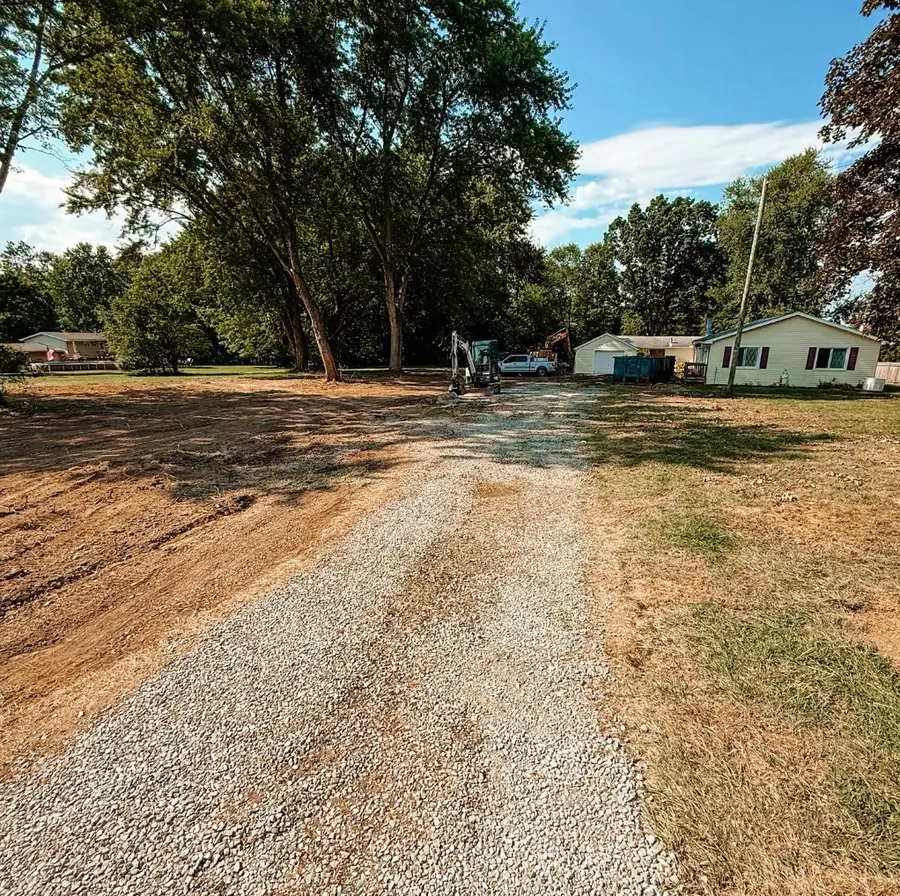
A gravel driveway in Ohio costs what it does because of four things: how much ground it covers, how soft that ground is, how deep the stone has to be, and how far the stone is hauled from the quarry. Culverts, clearing, slope and the shape of the lane add to that, so Jeff measures the site and gives a free estimate.
Length and width come first
Stone is sold by the ton, and tonnage comes from area times depth. A long farm lane takes many times the stone of a short drive to a garage. Width matters just as much: a lane wide enough for a delivery truck or a tractor with an implement needs more stone per foot than a single car width. Add the extras that are easy to forget, such as a parking pad by the house, a turnaround, a wider mouth at the road and a pull-off where two vehicles can pass on a long lane.
What is under the stone
The ground decides how much work happens before any stone arrives. Topsoil, sod and roots have to be stripped, because stone laid on soft organic soil sinks into it. On firm, dry subsoil that may be all the prep there is. On wet clay, which is common in northeastern Ohio, the base needs help: a layer of geotextile fabric to keep stone and mud apart, and often a thicker base. Soft spots, springs and old fill each add digging and stone. Good prep is the part of the price you never see again, and it is what makes the drive last.
Stone depth and layers
A driveway that holds up is built in layers. Large, angular base stone goes down first and locks together to carry weight. A smaller crushed stone with fines goes on top and packs into a tight surface. How deep each layer needs to be depends on the soil and the traffic: a car now and then needs less than a lane that carries loaded trucks, a camper or farm equipment. Thin stone over soft ground is the most common reason driveways fail, and going back to fix it costs more than building it right the first time.
Haul distance and the kind of stone
A large share of what you pay for stone is the trucking. Every load is priced on the tons carried and the distance from the quarry or stone yard to your drive, so a site far from a supplier costs more per ton delivered than one down the road. The type of stone changes the price as well. Crushed limestone, gravel and recycled material are priced differently, and clean washed stone costs more than a crusher-run mix. Jeff will tell you which stone suits your ground and why.
Culverts, ditches and the road
Where a drive crosses the road ditch it needs a culvert pipe, sized and set so the ditch keeps flowing. Long lanes may need more pipes where they cross low ground. Side ditches and a crown keep water off the surface. All of that adds pipe, stone and machine time. There is also the road owner to deal with. The Trumbull County Engineer, for example, lists driveway access and driveway culverts under its right-of-way permit, and townships, cities and the state have their own rules. Check with whoever owns your road before work starts.
Clearing, slope and getting trucks in
A new drive through woods or brush has to be cleared first, and the stumps in its path dug out. A steep drive takes more shaping, and may need extra drainage so runoff does not wash the stone downhill. Tight sites cost more too. If a loaded dump truck cannot back in and spread as it goes, the stone has to be dumped and moved with a machine. Overhead lines, soft shoulders and narrow gates are all worth pointing out when Jeff comes to look.
Repair costs less than rebuilding, if the base is sound
Not every tired driveway needs to be dug up. If the base is still solid, regrading pulls the stone that has washed to the edges back to the middle, restores the crown and fills the potholes, and a top-dress of fresh stone finishes it. That is a much smaller job than a new build. If the drive has gone to mud, has grass growing through it or was never given a base, adding more stone on top is money lost. Our gravel driveway installation and repair page covers both kinds of work.
Common Questions
What is the cheapest way to build a gravel driveway that still holds up?
Spend on the base and save on the extras. Keep the drive as short and straight as the site allows, make it only as wide as you need, and use a locally quarried crushed stone to hold trucking down. Do not skip stripping the topsoil, the fabric on soft clay, or the culvert at the road. Those are what keep you from paying for stone twice.
How much is a ton of gravel in Ohio, and how many tons does a driveway take?
Quarry prices change with the type and size of stone, and delivery depends on how far the truck drives, so there is no one figure for Ohio. Tonnage comes from the length, width and depth of the drive. Jeff looks at the site and the ground it sits on, and the stone is covered in his free estimate.
Is it less costly to fix my old gravel driveway or start over with a new base?
If the base is firm and the trouble is potholes, ruts, a lost crown or thin stone, regrading and top-dressing costs much less than rebuilding. If the drive pumps mud, has soft spots that swallow every load, or holds water because it sits below the yard, the base has failed and new stone on top will not last. Jeff can usually tell which one you have when he looks at it.
Getting a Real Number for Your Job
Want a price on a new drive or a repair? Call Jeff at (330) 625-5754. He will look at the route, the ground and the drainage, and give you a free estimate. Read how to build a gravel driveway that lasts, or see our driveway pages for Warren and Youngstown.