
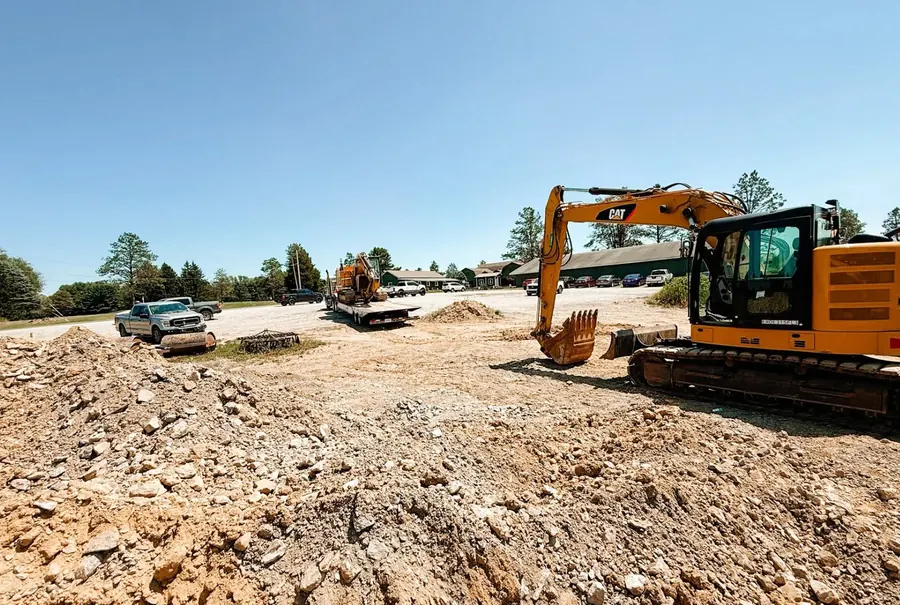
Driveway Culvert Installation & Replacement
Where a driveway crosses a ditch, a pipe has to carry the water under it. We install and replace driveway and farm lane culverts so the ditch keeps flowing and the drive stays put.
Culverts, Start to Finish
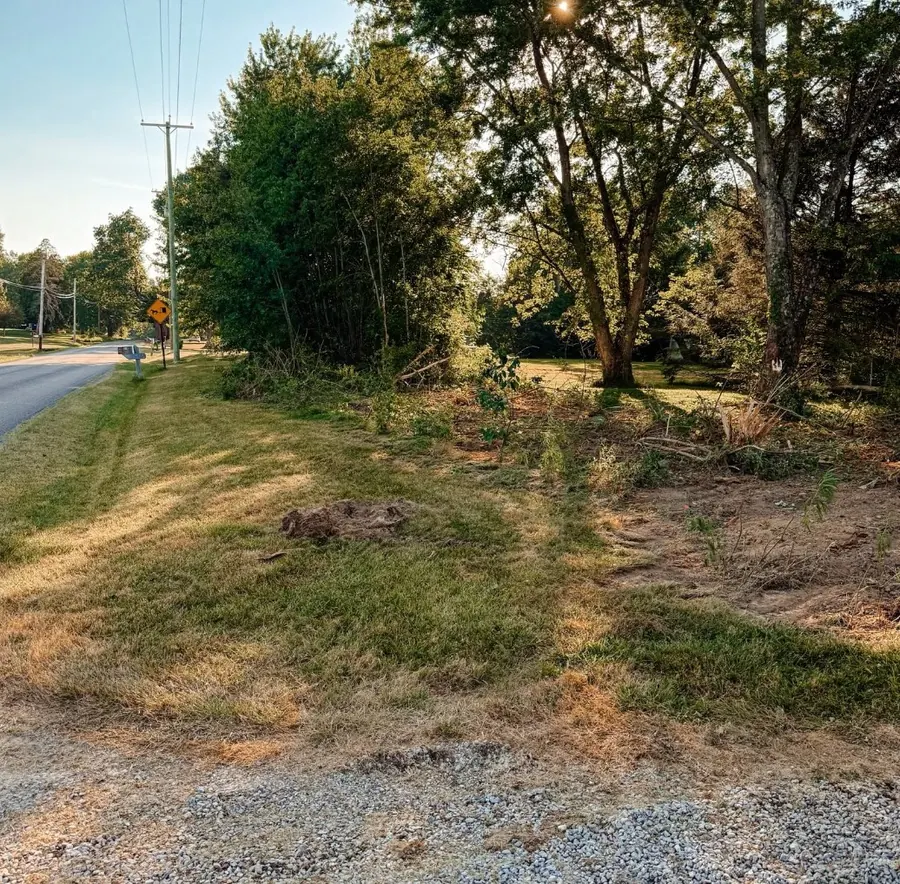
The first sign is usually a dip in the driveway right at the road. Then a hole opens beside it. After a hard rain the ditch backs up, water runs across the drive, and the stone you put down last spring ends up in the neighbor's yard. Look in the end of the pipe and you may see daylight through the top, or no daylight at all because it is packed with silt. A crushed, rusted or plugged culvert does not get better. It takes the driveway with it.
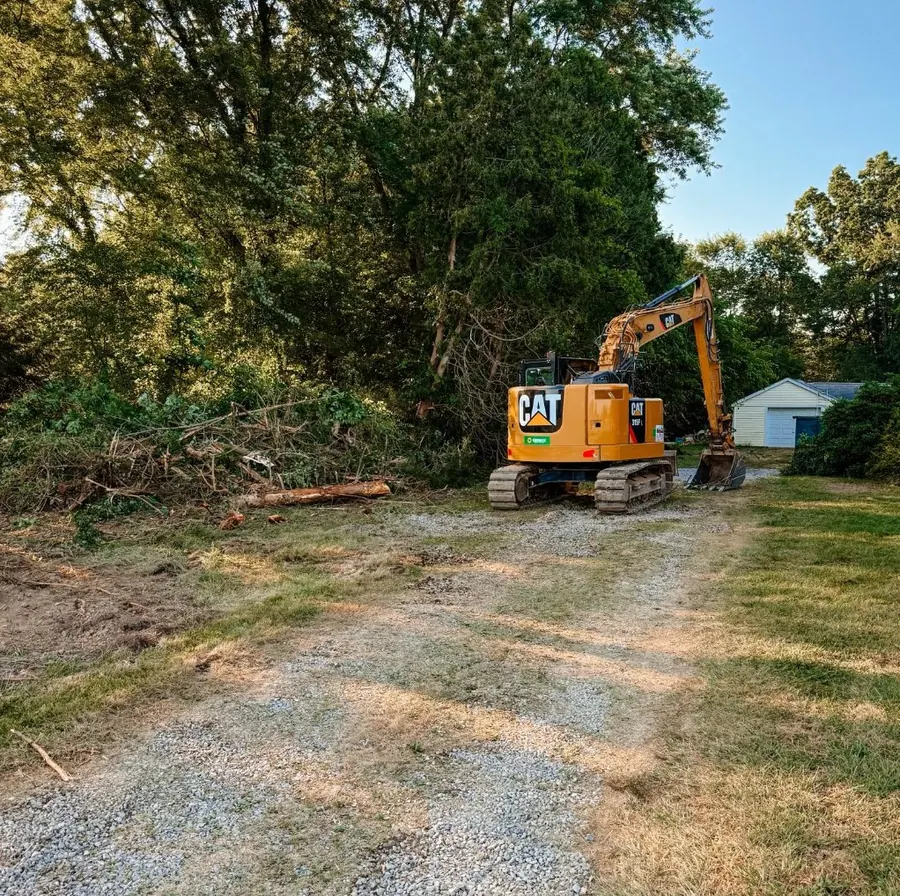
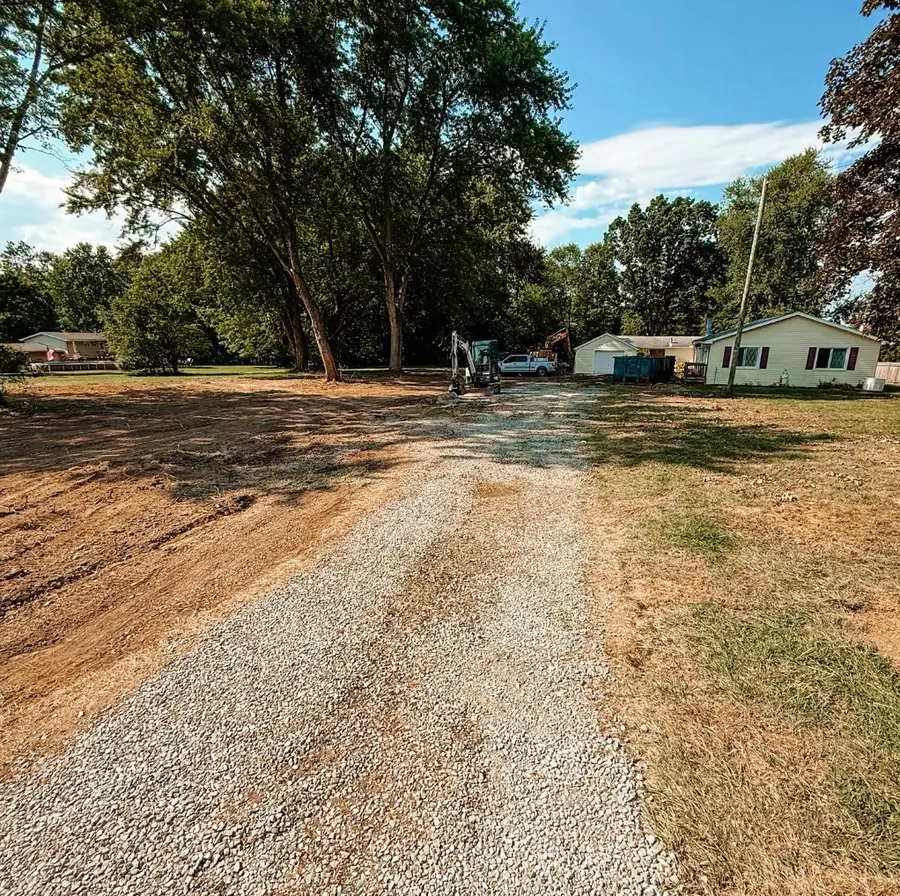
We dig the old pipe out with the excavator, cut the trench to grade, and set the new pipe on a firm bed so it has steady fall and lines up with the ditch on both ends. Backfill goes in around the pipe in layers and is packed tight, since that is what carries the load of a truck. Then the driveway goes back over the top with base stone. For a new drive, the culvert is the first thing in and everything else is built from it.
You are left with a ditch that flows, a crossing that holds a loaded truck, and ends that are shaped so they do not wash out. Culverts are part of our drainage solutions, and they go hand in hand with gravel driveway installation and repair. Putting in a new drive? Our guide on how to build a gravel driveway shows where the pipe fits. Call Jeff at (330) 625-5754.
Culvert Work We Handle
- New culverts for new driveways
- Crushed, rusted and plugged pipes replaced
- Farm lane and field entrance crossings
- Pipe bedded and backfilled in layers
- Inlet and outlet ends shaped and stoned
- Driveway rebuilt over the pipe
Who to ask about a pipe at the road
The ditch at the end of your driveway almost always sits in the road right-of-way, so the road's owner has a say in the pipe. Ask before you buy anything. On a county road, call the county engineer. The Trumbull County Engineer, for one, issues a right-of-way permit that covers driveway access and driveway culverts, and publishes a drive and yard pipe policy. On a state route in Ohio, ODOT requires a permit for driveway access and other work in its right-of-way. In Pennsylvania, PennDOT says you need a Highway Occupancy Permit to build or change a driveway or drainage on state highway land. On a township road or city street, start with the township or the city.
Size, material and length
At a public road, the road authority usually sets the pipe diameter, the material and the minimum length, so that part is not a guess. On private ground, such as a farm lane crossing a swale, the pipe is sized to the water that reaches it. A pipe that is too small backs up and overtops in a storm. Most driveway culverts today are corrugated plastic or corrugated metal. Both work when they are bedded and covered correctly. Length matters as much as diameter: a pipe that is too short leaves steep ends that cave in and a drive too narrow to turn into with a trailer.
Setting a pipe so it stays
Most failed culverts were set wrong, not made wrong. The pipe needs a firm, even bed with steady fall, so water does not pond inside and silt does not settle. The fill beside and over it has to be placed in layers and packed, because loose fill lets the pipe flatten under load. There has to be enough cover over the top for the traffic that will cross it, following the pipe maker's guidance and any road authority rule. And the ends need stone or a shaped bank so fast water does not eat the dirt out from around them. We do all of that, then rebuild the drive with base stone.
Who do I ask about replacing the culvert under my driveway at a county road?
Start with the county engineer's office for that county. The pipe sits in the road right-of-way, and the engineer's office can tell you what permit applies, what size and type of pipe it requires, and who is expected to pay for and install it. Policies differ from county to county, and state routes go through ODOT or PennDOT. Call them first, then call us with what they told you.
What size culvert pipe do I need for a driveway?
At a public road, the road authority normally tells you, so ask the county engineer, township, city or state highway office. On private land the pipe is sized to the area that drains to it and how hard it runs in a storm. Jeff looks at the ditch, the old pipe and the high-water marks. When in doubt, the next size up is rarely a mistake.
Is plastic or metal culvert pipe better under a gravel driveway?
Both hold up when installed right. Corrugated plastic does not rust and is light to handle. Corrugated metal is stiff and has a long record under roads. Either one can flatten if the fill around it is loose or the cover is too thin. If the pipe is at a public road, the road authority may specify the material, and that settles it.
How much dirt and stone has to go over a driveway culvert?
Enough that the load of a truck spreads out before it reaches the pipe. The right amount depends on the pipe's diameter and material, so we follow the pipe maker's guidance and whatever the road authority requires. Where the ditch is shallow and cover is tight, the answer may be a different pipe shape or material. Too little cover is the most common reason driveway pipes crush.
What does it cost to install or replace a driveway culvert?
The pipe itself is one part. The rest is the diameter and length required, how deep the ditch is, digging out the old pipe, the stone to rebuild the drive, and any permit the road authority requires. Soft, wet ditch bottoms need extra stone to make a bed. Jeff gives a free estimate once he has seen the crossing and you know what the road authority wants.
How a Job Runs
Talk It Through
Call or send the form. Tell us where the ground is and what you want it to look like when we leave.
We Look at the Site
Jeff walks it with you: the growth, the slope, the wet spots, the way in and out for the machines.
A Straight Plan
You get a free estimate and a plain recommendation on the approach that fits the ground.
The Work Gets Done
We bring the right machine for the job and do the work the way we said we would.
Clean and Ready
We leave the site cleaned up and ready for the next step, whatever that is for you.
Culverts Near You
Based in Farmdale, in Trumbull County, Ohio. Pick your town, or call and ask if we cover it.
Drainage pages for your town
More services
Need Culverts?
Call Jeff or send a few details. Estimates are free, and you get a straight answer on what the job takes.