
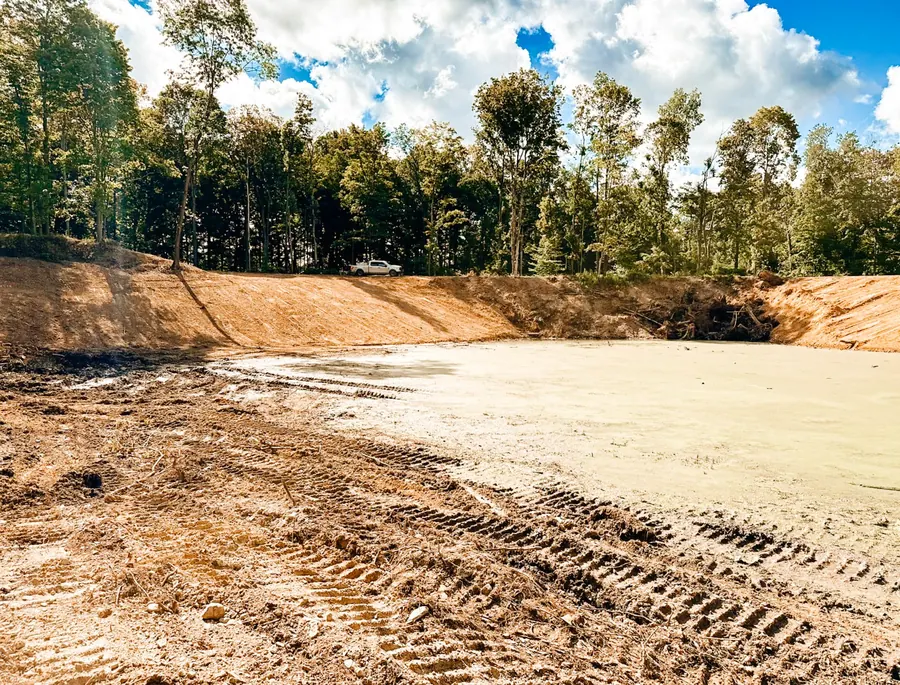
Whether you need a permit to dig a pond in Ohio depends on how the pond holds water and where it sits. A pond held back by a dam needs a construction permit from the Ohio DNR Division of Water Resources unless the dam falls within the size exemptions in state law, and wetlands, streams and local zoning can each bring their own approval, so check with your county Soil & Water Conservation District and your zoning office before any dirt moves.
Dug pond or dam pond: the first question
There are two basic ways to make a pond. A dug pond is a hole in the ground: the water sits below the land around it and nothing is holding it back. An embankment pond is made by building an earthen dam across a low draw so that water backs up behind it. Many ponds are a bit of both, with a hole on the uphill side and a low bank on the downhill side. The difference matters because Ohio's state permit is about dams. The more water a bank holds back, and the taller it is, the more the state cares.
The state dam rule and its exemptions
Ohio Revised Code section 1521.06 says no dam may be built without a construction permit from the state unless it is exempt. The exemptions listed are a dam six feet or less in height whatever it stores, a dam less than ten feet in height that stores no more than fifty acre-feet, and a dam of any height that stores no more than fifteen acre-feet. The Division of Water Resources measures height from the natural streambed at the downstream toe to the top of the dam. Do not assume your pond fits one of them. Confirm it with the Division's Dam Safety Program before any dirt moves.
If your dam is not exempt
A dam over those limits is a serious project, and it starts with an engineer's design. The Division of Water Resources fact sheet on construction permits describes a preliminary design report, then a full application with final plans and specifications, a cost estimate, a filing fee and a surety bond. Ohio also sorts dams into four classes by height, storage and what could be harmed downstream if the dam failed. If your pond is headed that way, have the design and the permit in hand first, then talk to Jeff about the earthmoving.
Wetlands and streams bring federal and state rules
The low, wet spot on a property looks like the natural place for a pond. It may also be a wetland, and a draw with water in it may be a regulated stream. Section 404 of the federal Clean Water Act requires a permit before dredged or fill material is placed in waters of the United States, wetlands included, and the U.S. Army Corps of Engineers runs that program day to day. Ohio EPA has its own wetland permitting as well. If your site is soggy most of the year, grows cattails or has a creek through it, get it looked at before digging.
Township zoning and earth-disturbance rules
Local rules vary a great deal across Ohio. Some communities require a zoning permit and engineered plans for any pond above a set surface size, and may have rules on where a pond can sit. Others say little. Your township or municipal zoning office is the place to ask. Size brings one more rule. Ohio EPA's construction stormwater general permit covers clearing, grading and excavating that disturb one or more acres, and a large pond with its spoil area can reach that. Ask Ohio EPA or your Soil & Water Conservation District if it applies to you.
Call your Soil & Water Conservation District early
Every Ohio county has a Soil & Water Conservation District, and for a pond it is the most useful first call. Staff know the local soils and the rules that apply in your county, and they can point you to the right state and federal offices. The Trumbull district, based in Cortland, lists ponds, impoundments and drainage among the things it works on. Ask what help it can give on your site. Make that call before you settle on a spot. Also remember buried lines: Ohio excavators must contact OHIO811 at least two working days before digging, not counting the day of the notice, and private lines and field tile are yours to point out.
Siting: will it hold water, and where will the water come from
Permits aside, a pond only works in the right spot. It needs soil that seals. The clay under much of northeastern Ohio can hold water, but glacial ground can hide seams of sand and gravel that leak, so it is common to dig test holes across a site before the real dig begins. Nobody can promise that a pond will hold. It needs a water source sized to the pond: enough runoff to fill it and keep it up, not so much that every storm overtops the bank. And it needs a safe overflow, a spillway that carries high water away without cutting the bank.
What we do, and what to bring to the first visit
We dig ponds and shape and grade pond banks with a tracked excavator, a dozer and a compact track loader. Where the spoil goes gets settled in the estimate. Before the estimate, it helps to know what your zoning office and your Soil & Water Conservation District said, and where the property lines, septic system and buried lines are. Jeff will walk the site and tell you plainly what he thinks of the spot. Start with our pond digging and pond bank shaping page.
Common Questions
Does a small farm pond need a dam permit from Ohio DNR?
It depends on the dam. State law lists exemptions for a dam six feet or less in height, a dam under ten feet that stores no more than fifty acre-feet, and a dam storing no more than fifteen acre-feet at any height. Do not assume yours fits. Have the Dam Safety Program at the Division of Water Resources confirm it, and check zoning and wetland rules too, since the exemption only covers the state dam permit.
Who do I call first about building a pond in Trumbull County?
Start with the Trumbull Soil & Water Conservation District in Cortland, which lists ponds among the things it works on, and with your township zoning office. Between them you will learn about local limits and which state or federal offices to ask next. Then call Jeff at (330) 625-5754 to look at the ground.
Can I dig a pond in a wet spot or along a creek on my property?
Be careful. A spot that stays wet may be a wetland, and a creek may be a regulated stream. Federal law requires a permit before fill or dredged material goes into those waters, and Ohio EPA has wetland rules of its own. Ask your Soil & Water Conservation District or the Army Corps of Engineers to look before you dig. A spot beside the wet area may turn out to be the better choice.
What to Do Next
Make the calls first, then call us. Jeff will walk your site, look at the ground and give you a free estimate once you know what your county and township require. Reach him at (330) 625-5754. See our excavation services, or the pages for Trumbull County and Kinsman and Farmdale.