

Gravel Driveway Installation & Repair in Northeast Ohio & Western Pennsylvania
New gravel driveways, farm lanes and private roads built on a proper base, and tired ones regraded, widened and resurfaced. Owner-operated out of Trumbull County, working across northeast Ohio and western Pennsylvania.
Gravel Driveways, Start to Finish
A gravel driveway tells you when it was built wrong. Potholes come back a month after you fill them. A soft spot swallows stone every spring. The middle sits lower than the edges, so the lane turns into a creek in a hard rain and the stone ends up in the ditch. Most of the time the gravel is not the problem. The problem is what is under it and where the water goes. Fix those two things and a gravel drive will serve a rural property for a long time.
Logan Earthworks builds and repairs gravel driveways, farm lanes and private roads for homeowners, farmers and builders. We are based in Farmdale in Trumbull County and work close to home in Trumbull, Mahoning and southern Ashtabula counties and Mercer County, Pennsylvania, as well as across the wider region. Gravel is what we build with. We do the dirt work, the base, the stone and the drainage, which is the part that decides if any driveway holds up. If your lane needs more than what is listed here, tell us about it when you call.
Jeff, the owner, looks at each lane before quoting. He checks how long it is, how steep, where it holds water, what it is built on and what is going to drive on it. A drive that only sees a pickup is one thing. A lane that carries propane, concrete and feed trucks needs more under it. You get a plain recommendation, anywhere from a simple regrade to a full rebuild, and a free estimate.
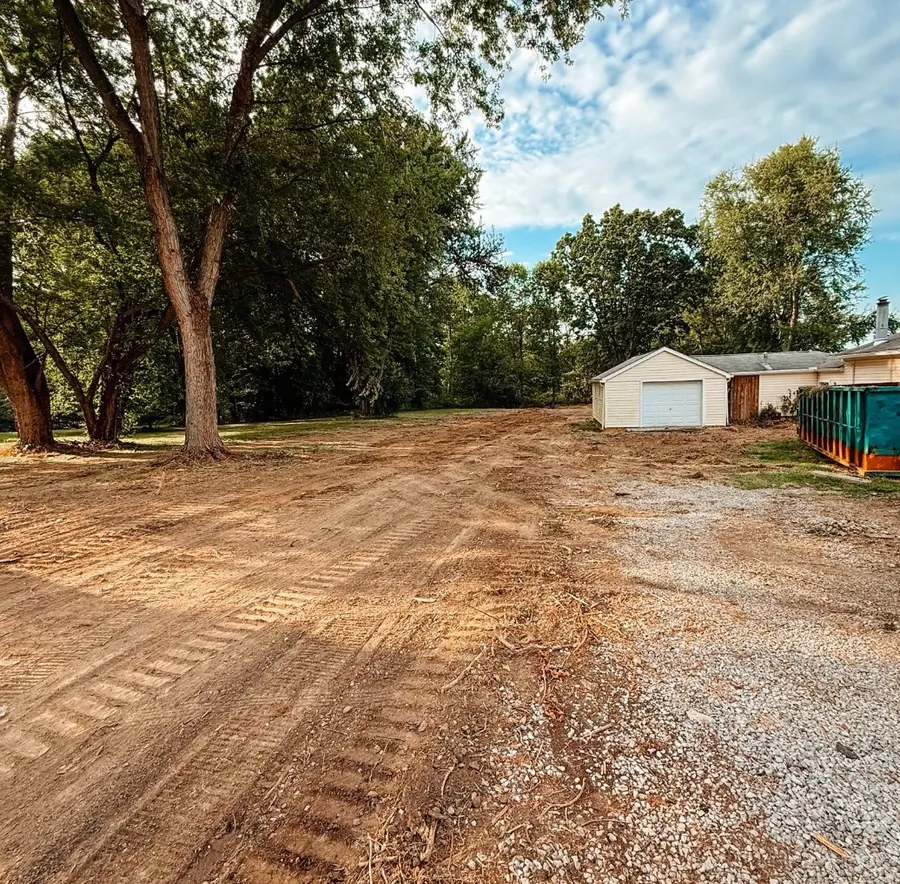
Gravel Driveway Work We Do
- New gravel driveway installation
- Driveway repair for potholes and washouts
- Driveway grading and crown rebuilding
- Private road and farm lane construction
- Driveway widening, turnarounds and parking pads
- Gravel resurfacing with fresh top stone
How We Build a New Gravel Driveway
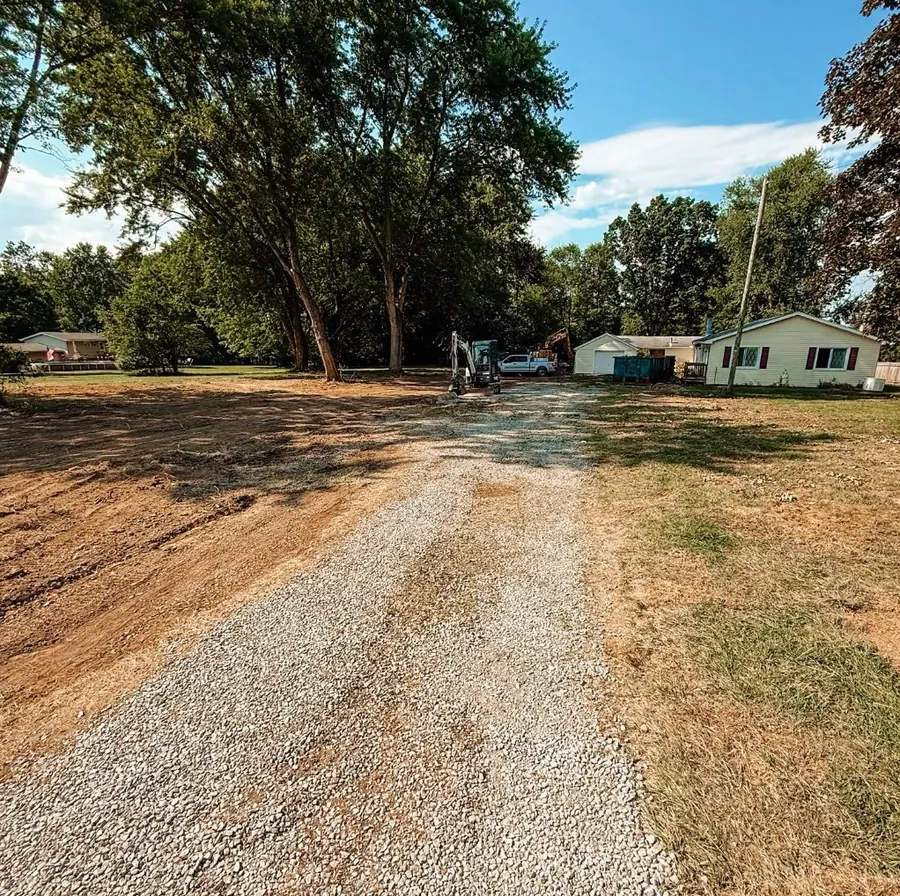
First the topsoil and sod come off, because stone laid on topsoil sinks into it. We cut the lane down to firm subsoil, shape it with a crown so water sheds to both sides, and cut ditches or swales where the ground calls for them. On soft clay, a layer of geotextile fabric under the stone can keep it from punching down into the mud. Then comes the base: large, angular stone that locks together and carries the load. A dense graded top course, such as crushed limestone with fines in it, goes over the base and packs tight. Our guide on how to build a gravel driveway that lasts shows each layer.
Repair, Regrading and Resurfacing
An existing drive does not always need to be torn out. If the base is sound, we cut the potholes and washboard out instead of just filling them, pull the stone that has crept to the edges back onto the lane, rebuild the crown and add fresh top stone where it has worn thin. If stone keeps vanishing into one soft spot, we dig that section out, find out why it is wet and rebuild it from the base up. Filling a pothole with loose stone does not last, because the hard edges of the hole and the water that made it are both still there.
Water Is What Wrecks a Driveway
Nearly every failed gravel lane has a water problem. Clay subsoil does not drain, so water that soaks through the stone sits in the base and turns it to pudding under traffic. Freezing and thawing finish the job. The cure is shape and outlets: a crown on the lane, ditches that fall toward a low point, and a pipe wherever water has to cross. A properly bedded driveway culvert at the road and at each low crossing keeps the drive from acting as a dam. On long hills we cut shallow cross drains so runoff leaves the lane before it picks up speed.
Farm Lanes, Private Roads and New Entrances
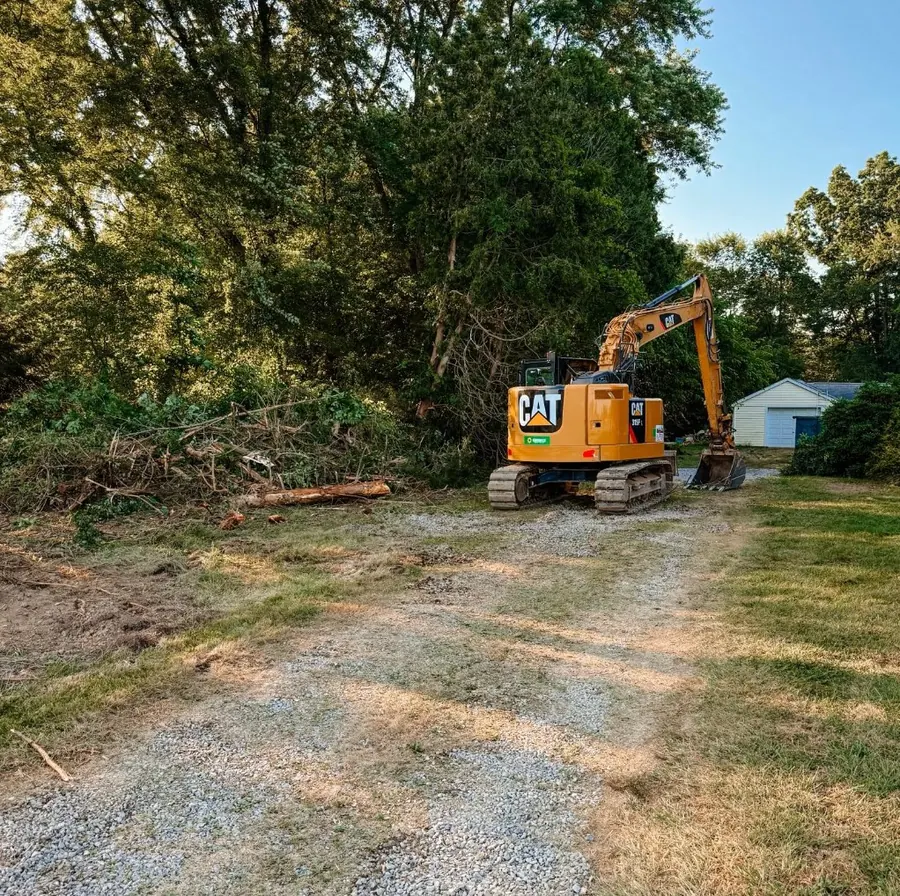
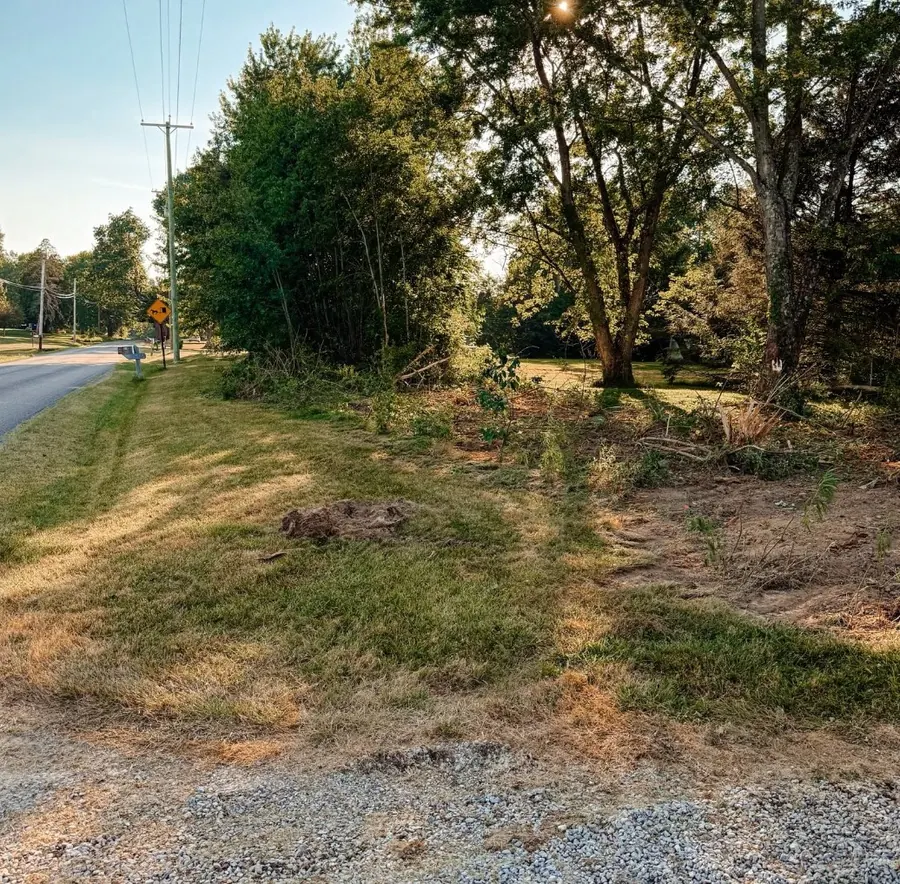
Long lanes to a back field, a cabin or a new home site are built the same way, just more of it, and they often start with clearing a path through brush or woods. We can clear the route, build the lane and grade a pad at the end of it with the same machines. A new entrance onto a public road is a separate question. The office that maintains the road, be it ODOT, the county engineer or your township, decides what approval and what size pipe it wants. In Pennsylvania, PennDOT requires a permit for driveways that connect to a state highway. Check before any work starts at the road.
What is the cheapest way to build a gravel driveway?
The cheapest way that lasts is to spend on the base and save on the top. Strip the topsoil, use fabric on soft ground, put down a solid layer of large base stone and finish with a modest layer of dense graded stone. Skipping the base looks like a saving, but you end up buying top stone again and again as it sinks. Our gravel driveway cost guide for Ohio breaks down where the money goes.
How do you install gravel for a driveway?
In layers. Remove the topsoil down to firm ground, shape a crown, lay fabric where the soil is soft, then place large angular base stone and pack it. Top it with a dense graded stone that has fines in it so it knits together. Each layer is spread evenly and packed before the next goes on. Finish by shaping the edges and making sure water has a ditch or a pipe to follow.
How much is a ton of gravel in Ohio?
It changes with the type and size of stone, the quarry and above all the trucking distance, so any number printed here would be wrong for your address. A local quarry or stone yard can quote the delivered price per ton. A driveway estimate should cover the finished job, with the base prep, stone, grading and spreading spelled out, so you can compare one total against another. Ask how stone is handled when Jeff looks at the lane.
How thick should the gravel be on a driveway?
It depends on the soil and the traffic. Firm, well-drained ground under car traffic needs less. Soft clay under loaded trucks needs a thick base course, often with fabric below it. The top layer stays thinner, just enough to give a tight, smooth surface. We set the depths after seeing the ground and asking what will drive on it, not from a chart.
Do I need a permit to put in a new driveway in Ohio or Pennsylvania?
A new connection to a public road usually needs approval from whoever maintains that road. In Ohio that may be ODOT, the county engineer, the township or the city. In Pennsylvania, PennDOT says driveway projects connected to state highways require a permit. Rules on pipe size and sight distance differ by office, so call them before any work at the road edge.
How a Job Runs
Talk It Through
Call or send the form. Tell us where the ground is and what you want it to look like when we leave.
We Look at the Site
Jeff walks it with you: the growth, the slope, the wet spots, the way in and out for the machines.
A Straight Plan
You get a free estimate and a plain recommendation on the approach that fits the ground.
The Work Gets Done
We bring the right machine for the job and do the work the way we said we would.
Clean and Ready
We leave the site cleaned up and ready for the next step, whatever that is for you.
Gravel Driveways Near You
Based in Farmdale, in Trumbull County, Ohio. Pick your town, or call and ask if we cover it.
Gravel Driveways pages for your town
More services
Need Gravel Driveways?
Call Jeff or send a few details. Estimates are free, and you get a straight answer on what the job takes.