
Building Pads for Homes, Garages & Pole Barns
A building is only as good as the ground under it. We strip the topsoil, cut and fill to grade, compact the pad and shape the ground around it so water runs away from your house, garage or pole barn.
Building Pads, Start to Finish
The barn kit is ordered, or the garage plans are drawn, and the builder has asked one question: is the pad ready? Out back the spot you picked is a foot and a half out of level, covered in sod, and soft every spring. Set a building on that as it is and you get a floor that cracks, doors that bind, and water that runs in under the wall. The fix is not complicated. It is dirt work done in the right order with the right machines.
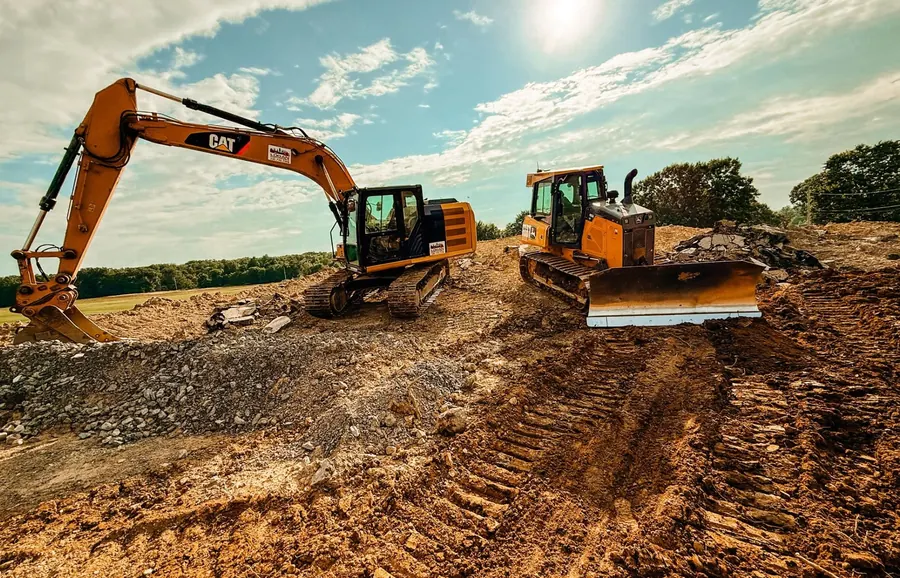
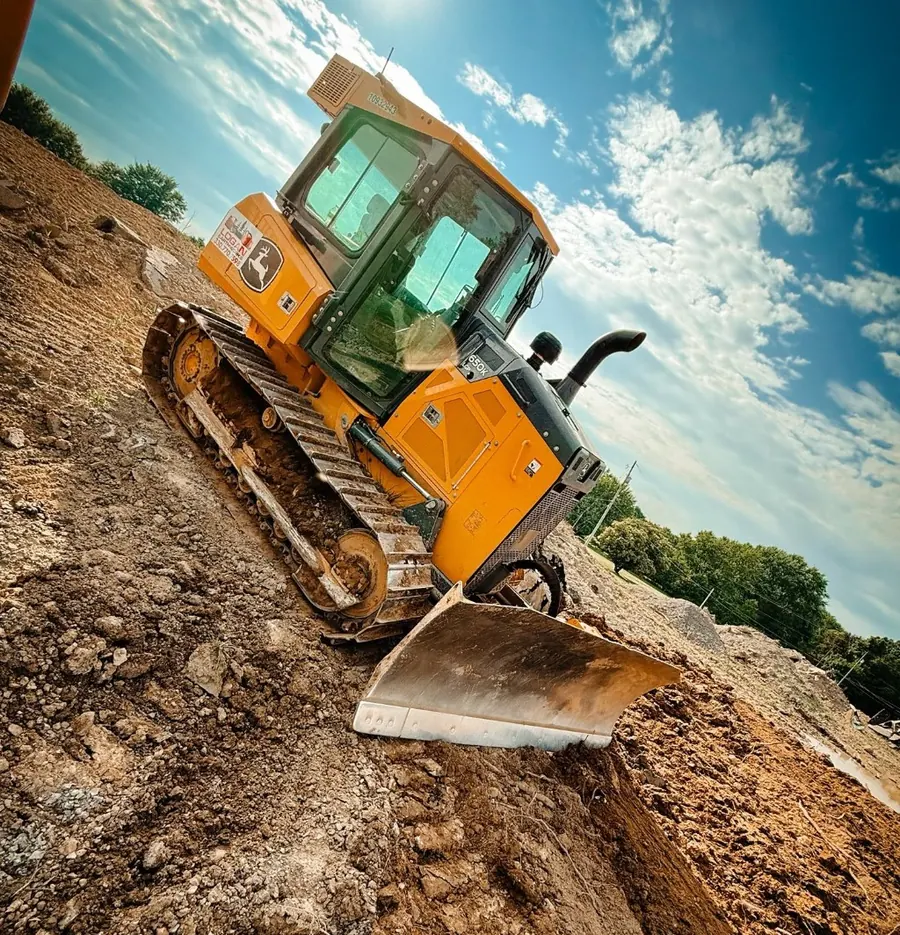
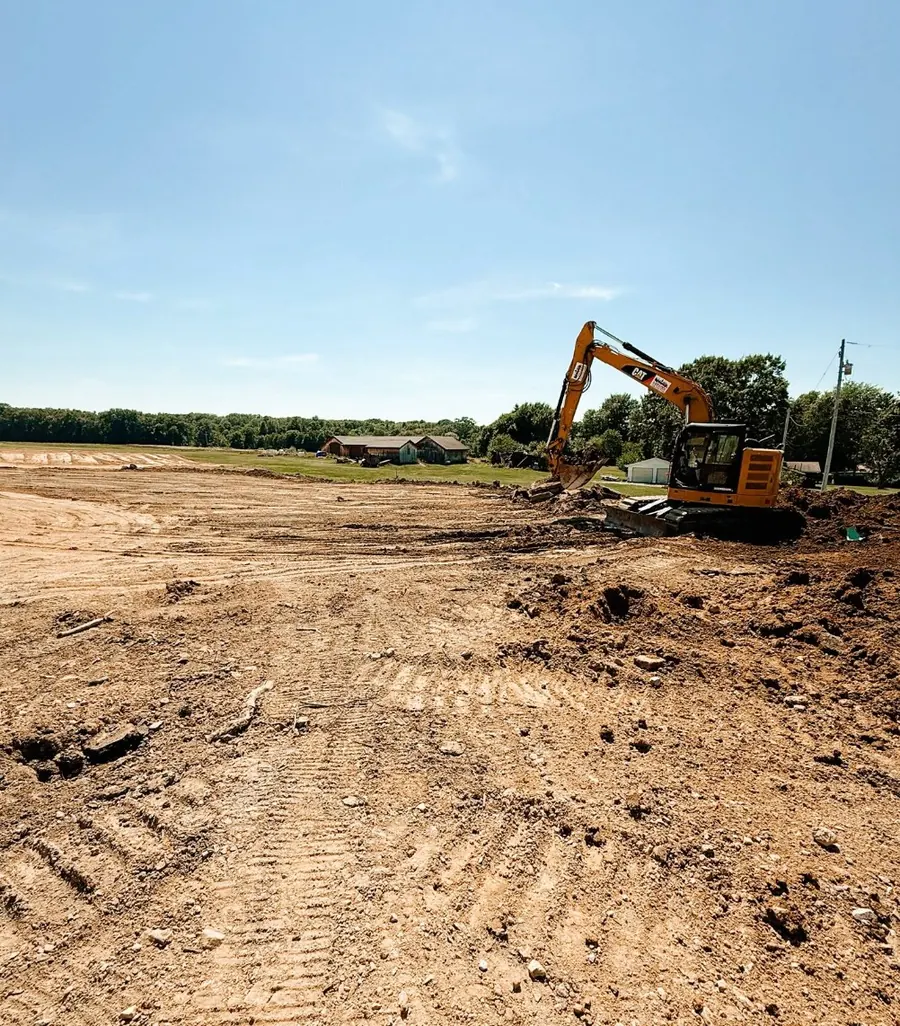
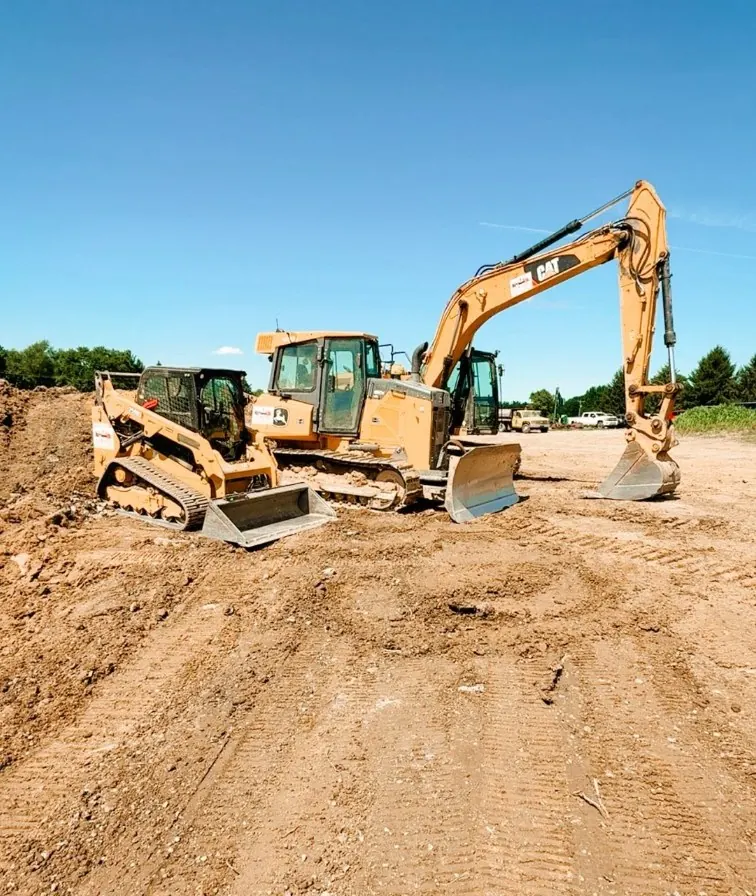
We start by stripping the topsoil and anything with roots in it, because black dirt and sod do not hold a building. That soil is stockpiled for you to use on the yard later. Then the dozer and excavator cut the high side and fill the low side with clean material, placed in layers and packed as it goes up. The pad is built larger than the building, brought to the height your builder calls for, and topped with stone where the plan calls for it.
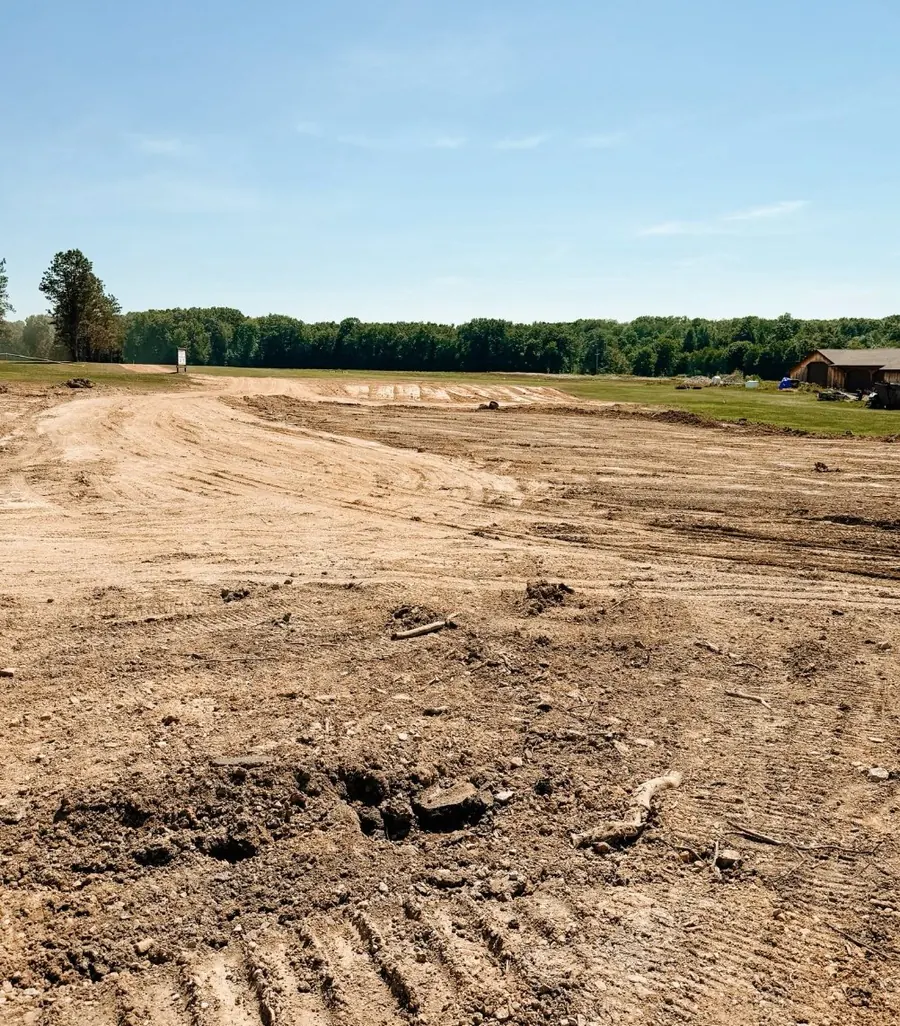
You are left with a firm, level pad that sits above the ground around it, with the surrounding grade shaped to carry water off. Your concrete crew or pole barn builder can pull in and go to work. Pads are the heart of our site preparation work. If the spot is still in trees, we handle the lot clearing first. A gravel driveway to the new building can go in on the same trip.
What Goes Into a Pad
- Topsoil and sod stripped and stockpiled
- High side cut, low side filled
- Fill placed in layers and compacted
- Pad built wider than the building
- Stone base spread where the plan calls
- Ground around the pad graded to drain
What makes a pad hold up
Three things. First, nothing that rots stays under it: no sod, no topsoil, no roots, no buried stumps. Second, fill goes in thin layers and each one is packed before the next goes on. A pile of loose dirt pushed level looks fine the day it is done and settles for a long time after. Third, the pad sits high. In northeast Ohio clay, water sits where it lands, so the pad needs to be the high spot with the ground falling away on every side. If your builder or engineer wants compaction tested, tell us up front and we will work with whoever they send.
House, garage and pole barn pads are not the same
A house with a basement is a dig more than a pad: we excavate to the depth on the plans and leave firm ground for the footer crew. A slab-on-grade garage wants a compacted pad with a stone base at the height the concrete crew sets. A pole barn wants a level pad that reaches out past the walls, so the posts go into firm ground and roof water lands on stone and not in a rut along the wall. Your builder's drawings set the size, height and base. Your concrete crew or barn builder takes it from there, on a pad built for what they are setting on it.
Water, access and what to settle first
Decide where the water goes before the first cut. Roof runoff, the uphill yard and the driveway all send water at a new building, and a swale or a drain is easy to shape while the machines are there. See our drainage solutions for those. Think about trucks too: concrete and lumber need a firm way in. Then the paperwork. Zoning setbacks and building permits come from your township, city or county, so check with them before the pad is placed. If you cannot find your pins, have a surveyor mark the line. A locate request to Ohio 811 has to be placed before digging so buried lines get marked, and we sort out who places it when we look at the job.
How much bigger than a pole barn should the pad be?
Bigger on every side, so the posts sit in firm ground and roof water drips onto the pad and not beside it. How much bigger is your barn builder's call, and most have a number they want. Get it from them in writing along with the finished height, and we build to that. Extra width for an apron at the big door is worth asking about.
Does the topsoil have to come off before a building pad goes in?
Yes. Topsoil is full of roots and organic matter. It holds water, it stays soft and it breaks down over time, which is the opposite of what a building needs. We strip it down to firm subsoil and stockpile it on your property. It is good material for dressing the yard around the building once the work is finished.
Can you build a level pad on a sloped yard?
Yes, by cutting into the high side and filling the low side. The fill has to be placed in layers and compacted, and the banks on both sides need a slope that will hold and grow grass. On a steep site the pad may need more room than you expect for those banks. If your slope is a steep one, ask when we look at the site and Jeff will talk through the options.
What affects the cost of a pad for a garage or pole barn?
The size of the pad, how far out of level the spot is, how much fill or stone has to be trucked in, and how easy it is to reach. Clearing trees first, soft wet ground, and long hauls for material all add to it. A flat, dry spot near the driveway is the low end. Jeff measures it and gives a free estimate.
How long should a new pad sit before concrete is poured?
That depends on how it was built. Fill dumped and pushed level needs a long time to settle. A pad built in thin, compacted layers on firm subsoil is made to be built on. The final say belongs to your concrete crew or engineer, who may want it tested. Tell us your pour date when you call so timing can be talked through.
How a Job Runs
Talk It Through
Call or send the form. Tell us where the ground is and what you want it to look like when we leave.
We Look at the Site
Jeff walks it with you: the growth, the slope, the wet spots, the way in and out for the machines.
A Straight Plan
You get a free estimate and a plain recommendation on the approach that fits the ground.
The Work Gets Done
We bring the right machine for the job and do the work the way we said we would.
Clean and Ready
We leave the site cleaned up and ready for the next step, whatever that is for you.
Building Pads Near You
Based in Farmdale, in Trumbull County, Ohio. Pick your town, or call and ask if we cover it.
More services
Need Building Pads?
Call Jeff or send a few details. Estimates are free, and you get a straight answer on what the job takes.