
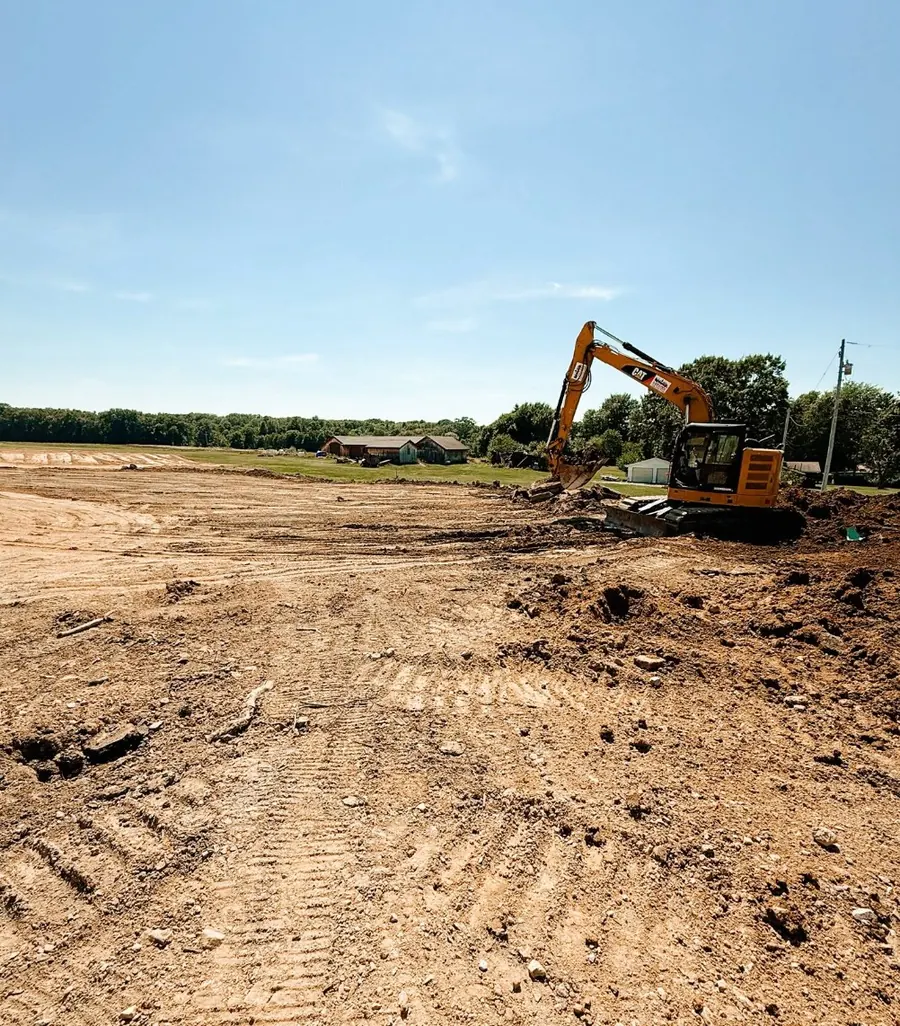
The cost of a French drain or yard drainage job comes down to how long and deep the trench is, how far the water has to be carried to an outlet, what the soil is like to dig, and how hard the spot is to reach. Sometimes regrading the yard fixes the problem for less than pipe would, so Jeff looks at the water first and prices the fix second, with a free estimate.
Trench length and depth
A French drain is priced much like any trench: the longer and deeper it is, the more digging, pipe, stone and fabric it takes. A short run along one wet edge of a lawn is a small job. A drain that wraps a building or cuts across a whole back yard is not. Depth is set by the water you are trying to catch and by the fall needed to reach the outlet. A drain has to slope the whole way, so on a flat lot the trench gets deeper as it goes, and the far end can be a much bigger dig than the start.
Where the water goes
The outlet is the part people forget, and it can be half the job. Collected water has to run by gravity to somewhere lower: a ditch, a swale, a slope at the back of the lot. If that spot is close, the outlet is a short length of solid pipe. If the only low ground is across the yard or down a long side lot, the pipe run and the trench grow with it. A wet spot that is the low point of the whole property is the hardest case, and may call for regrading instead.
What the soil is like to dig
Loose, dry soil digs fast and trench walls stand up. Northeastern Ohio often gives us the opposite: sticky clay that clings to the bucket, hardpan that has to be broken, shale near the surface in places, and trenches that fill with water as they are dug. Tree roots slow things down, and so do buried surprises like old field tile, concrete or fill. None of this shows from the lawn, which is why an honest drainage price allows for the ground and says what happens if rock turns up.
Access and what is in the way
A drain in an open side yard is simple. The same drain behind a fence, between two houses or under a row of shrubs takes a smaller machine, more hand work and more time. Buried utilities have to be located before any digging, and a trench that crosses gas, electric, water or cable lines has to be dug carefully around them. Septic tanks and leach fields are no-go areas for trenching. Tell Jeff about anything buried that you know of. Your septic contractor or the health department can help you find the system if you are unsure.
Pipe, stone and fabric
Materials are a real share of a drainage price. A French drain needs perforated pipe, enough washed stone to surround it, and filter fabric to keep silt from plugging the stone. The stone is hauled in by the ton, so a wider or deeper trench means more loads. Solid pipe carries the water from the drain to the outlet. Surface inlets, cleanouts and an outlet guard add a little more. Skimping on stone or leaving out the fabric saves money on the day and shortens the life of the drain.
The dirt that comes out, and the lawn
A trench filled with pipe and stone leaves a pile of soil that no longer fits in the hole. On a larger property we can spread it and grade it into a low area. On a tight lot it may need to be trucked away, which is an added cost to arrange. Then there is the surface. We backfill, grade the strip smooth and leave it ready for seed or sod. Machines on a wet lawn leave tracks, so dry weather makes for a cleaner and less costly job.
When grading or a culvert is the lower-cost fix
Pipe is not always the answer. If water sits in a bowl or runs toward the house because the yard tilts the wrong way, moving dirt to change the slope can cure it with nothing buried at all. A shallow grass swale can carry more storm water than a small pipe. And if the yard floods because the pipe under the driveway is crushed or plugged, a new culvert is the repair. Jeff will tell you which fix suits the site, even when it is the smaller job.
Common Questions
How much does it cost to put a French drain or other drainage in a yard?
It depends on what kind of drainage the yard needs. Filling and regrading a low spot is a small job. A long French drain with a far outlet, tight access and hard clay to dig is a much bigger one. Length, depth, outlet distance, soil and access set the figure. Jeff looks at the yard and gives a free estimate.
Is a swale or a French drain the less costly fix for a wet yard?
A swale usually costs less, because it is only shaped earth with no pipe or stone to buy. It suits water that runs across the surface in a storm. A French drain is for water that soaks into the ground and keeps a strip soggy. Many yards need a bit of both: a swale to turn the runoff and a short drain where the ground stays wet.
Does a deeper French drain cost a lot more than a shallow one?
Yes, depth adds up quickly. A deeper trench means more soil to dig and get rid of, more stone to fill it, and slower, more careful work around buried lines. Depth should be set by where the water is and by the fall needed to reach the outlet, not by a rule of thumb. Deeper than needed is money spent for nothing.
Getting a Real Number for Your Job
If your yard holds water, call Jeff at (330) 625-5754 or send the form. He will look at where the water comes from and where it can go, then give you a free estimate. See all our drainage work, or our yard drainage pages for Youngstown and Pittsburgh.
See our drainage service or call (330) 625-5754.