
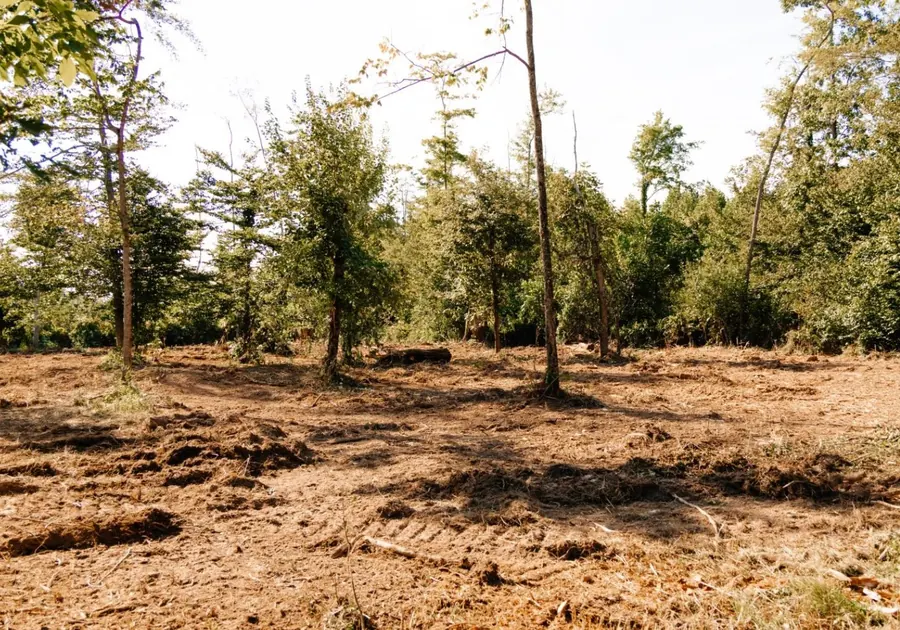
After forestry mulching, leave the mulch where it lies, expect the cut brush to send up new sprouts in the next growing season, and plan to mow or treat that regrowth before it turns woody again. If you want grass or a food plot, rake back or thin the thick patches of mulch first so the seed touches soil.
The first few weeks: let it settle
Fresh mulch looks rough. It is a mix of fine shreds and coarser chunks, and it sits fluffed up on the ground. Give it a few rains. It packs down, turns gray and begins to knit into the surface. There is no need to rake it off or haul it away. That layer is doing a job: it covers bare soil, softens the hit of hard rain, holds moisture and slows weed seed from sprouting. On a slope, it is the thing that keeps the dirt in place until something green takes over.
Expect regrowth, and know what it will be
The mulcher cuts the tops. The roots are still alive, and many of the plants that take over old fields are built to resprout. Multiflora rose, autumn olive and bush honeysuckle all push up new shoots from the root crown after cutting. So will many hardwood saplings. Seeds already in the soil sprout too, now that sunlight reaches the ground. None of this means the job failed. It means the first cut is step one. What you do in the next growing season decides if the ground stays open. Our invasive brush removal page goes deeper on these plants.
Keeping it open: mow, treat or re-mulch
New sprouts are soft and thin for their first season, and that is the time to hit them. On ground a tractor can cover, mowing once or twice a year with a brush hog wears the roots down and lets grass take over. Where you want stubborn shrubs killed, treating the cut stumps or fresh sprouts with a herbicide labeled for that use is the usual method. Read and follow the label. If the ground gets away from you for a few seasons, a quick pass with the mulcher resets it.
Seeding grass or pasture
Seed has to touch soil to grow. Where the mulch is thin and dirt shows through, you can broadcast seed and let rain work it in. Where the mulch lies thick, seed sits on top and dries out, so rake those patches thin or work them into the soil first. Fresh wood chips also tie up some nitrogen at the soil surface as they rot, so new grass may start slowly without fertilizer. In our part of Ohio, late summer into early fall and early spring are the usual windows for cool-season grass. We leave the ground ready for seed.
The stubs that are left
A mulcher grinds each stem down near the dirt, but it does not dig. Where brush was thick you will find low stubs and root crowns at or just above ground level. For woods, trails and wildlife ground that is fine. If you plan to mow with a finish mower, bale hay or turn livestock out, walk the ground first. Larger stubs can be ground below the surface with a stump grinding head, and any that sit where a building or drive will go need to be dug out.
Food plots, trails and hunting ground
Mulched ground is a good start for wildlife work. Trails and shooting lanes need little more than an occasional mowing to stay open. A food plot needs more: the mulch thinned or tilled in, the soil tested, and lime and fertilizer added as the test calls for before planting. Leaving some mulched areas to grow back in native brush and briars gives deer and birds cover next to the feed. We cut trails, lanes and openings on hunting land, and lay them out where you want them.
When to call us back
Most ground needs only mowing after a good first cut. Call if the regrowth has gone woody and thick enough to stall a mower, if you want to push the cleared edge farther back, or if a storm has dropped tops and limbs into a trail. A touch-up pass on ground that was mulched before goes much quicker than the first one did, because the heavy old growth is already gone. See what else the machine can do on our forestry mulching page.
Common Questions
Will brush grow back after forestry mulching?
Yes, some of it will. The roots are left in the ground, and shrubs such as multiflora rose, autumn olive and honeysuckle resprout from them. Seeds in the soil also come up once light reaches them. The regrowth is soft the first season and easy to control by mowing or treating. Left alone for several seasons, it will grow back into brush.
Can I plant grass seed right on top of forestry mulch?
Only where the mulch is thin enough that soil shows through. Seed that lands on a thick mat of chips dries out before it roots. Rake heavy patches thin or work them into the soil, then seed, and expect to add some nitrogen because rotting wood ties it up for a while. Late summer to early fall is a good window for cool-season grass in Ohio.
How long does forestry mulch take to break down?
It depends on how thick it lies, how fine it was ground, what kind of wood it is and how wet the site stays. A thin layer of fine material breaks down much sooner than a deep mat from heavy growth. Soil contact and moisture speed it up, so mulch on damp, shaded ground goes faster than mulch on a dry bank.
What to Do Next
Have ground that was cleared and is getting away from you, or a piece you want opened up for the first time? Call Jeff at (330) 625-5754 for a free estimate. We take jobs around Chardon and across Geauga County.