

Drainage Solutions in Northeast Ohio & Western Pennsylvania
Standing water, soggy yards, washed-out lanes and eroding banks fixed with French drains, swales, ditches, culverts and proper grading. We find where the water comes from and give it somewhere to go.
Drainage, Start to Finish
The yard squishes underfoot into June. There is a pond by the barn door every time it rains. The neighbor's field drains across your lawn, the driveway washes out at the same spot each spring, and the ditch bank is creeping toward the fence. Water problems look different on every property, but they share a cause: water is arriving faster than it can leave. Until it has a path, it will keep killing grass, rotting posts, heaving stone and working its way toward the lowest thing you care about.
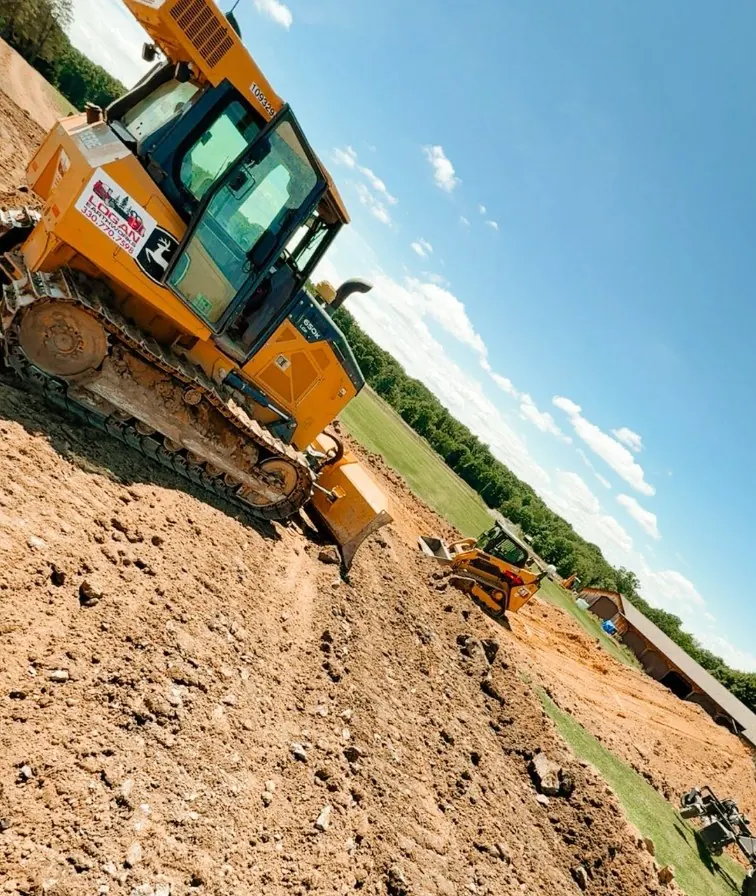
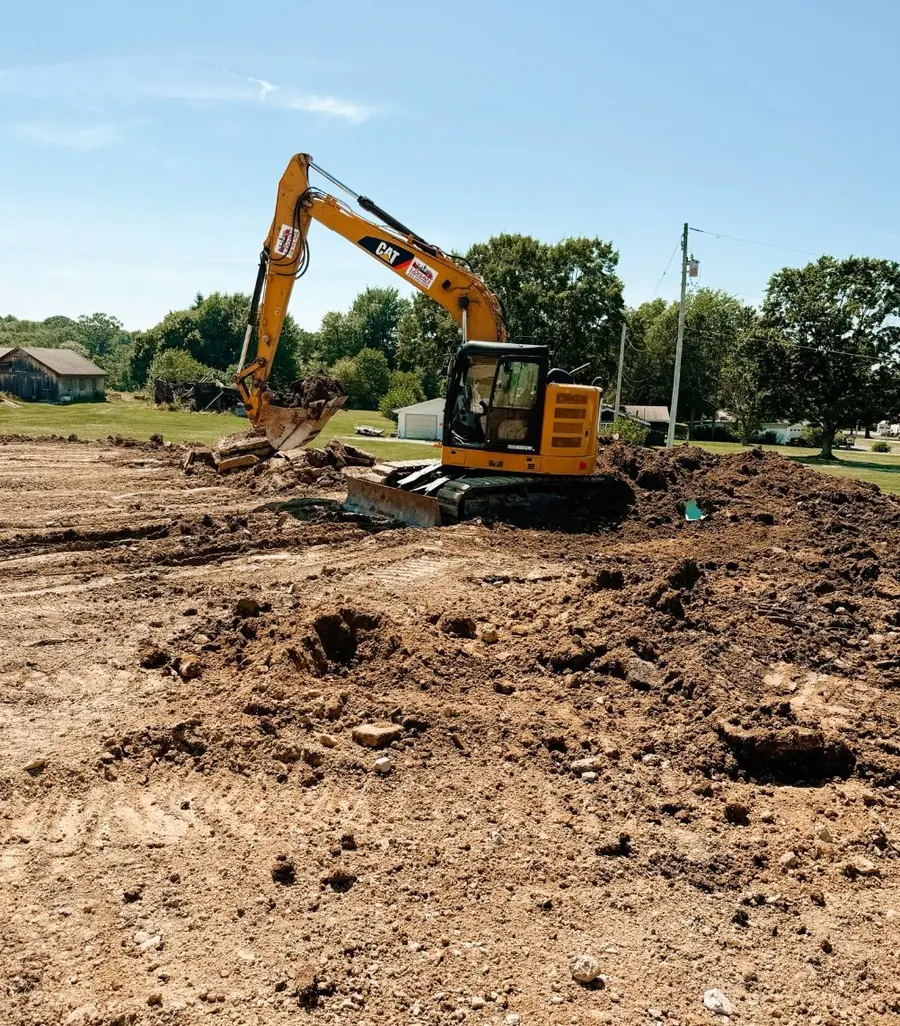
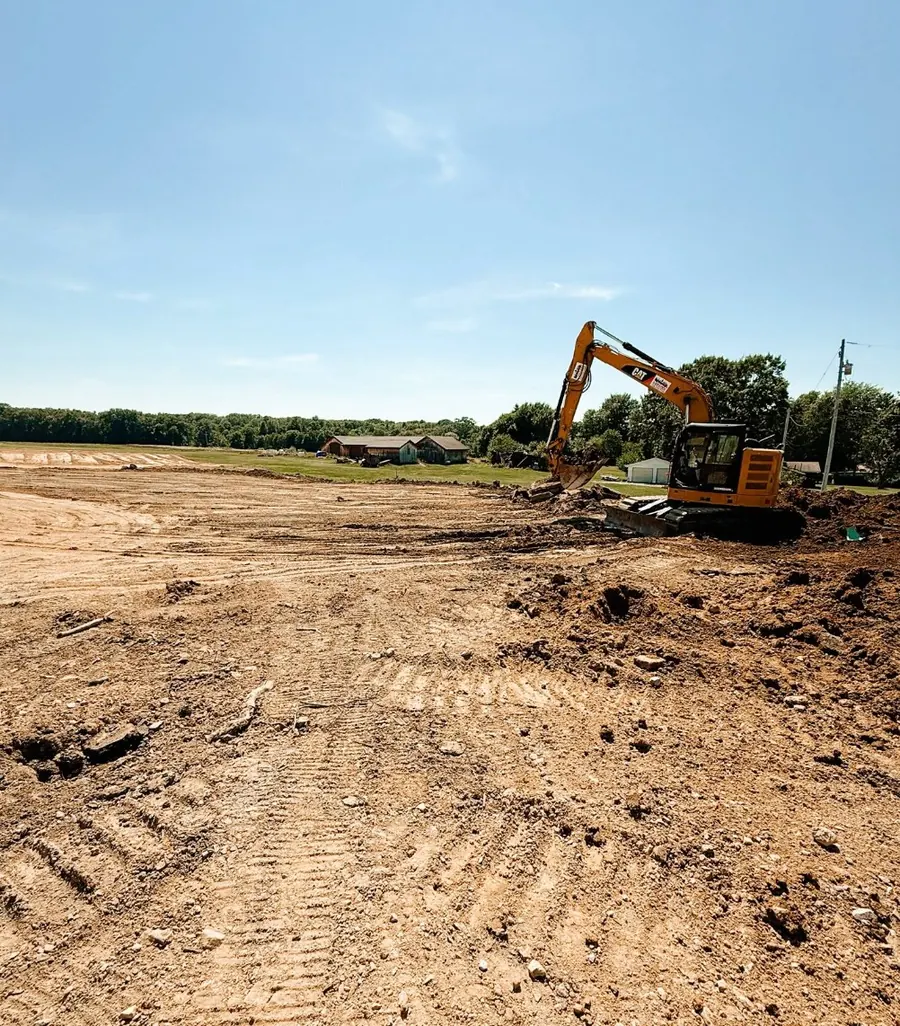
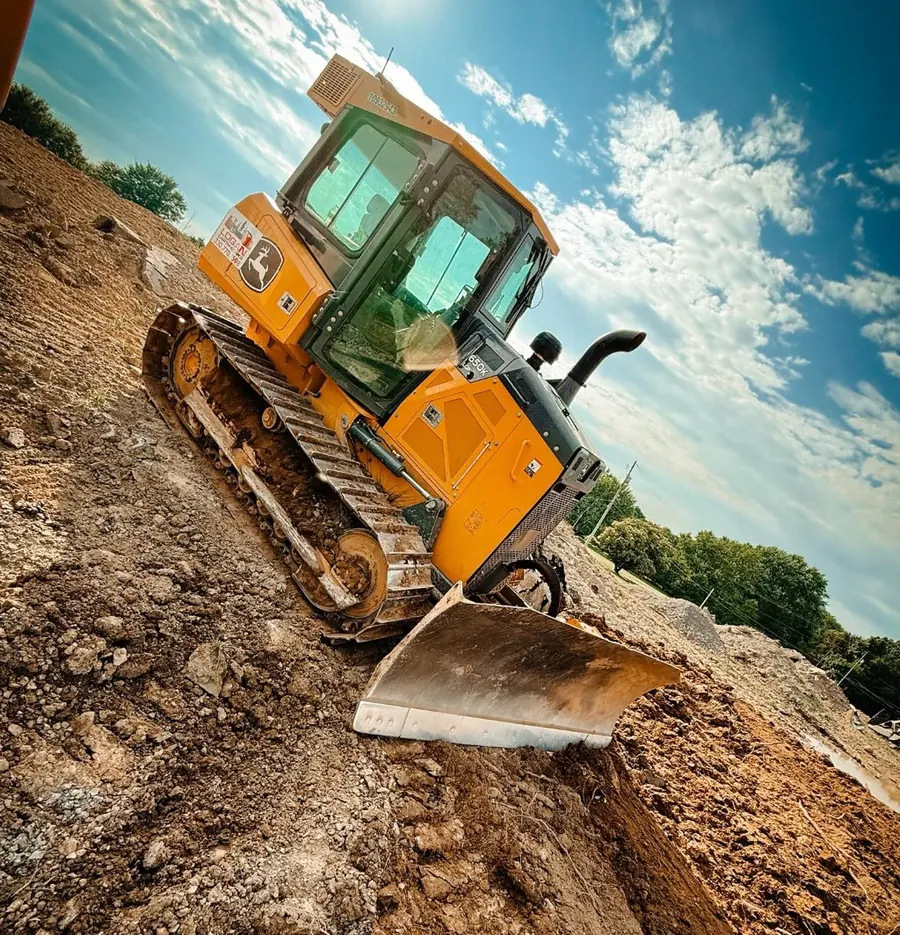
Logan Earthworks fixes drainage on residential, farm and commercial properties from our base in Farmdale, Trumbull County, across northeastern and eastern Ohio and into western Pennsylvania. Jeff, the owner, starts by reading the ground: where the water comes from, what soil it is sitting on, and where the nearest lower outlet is. Then we use the excavator, dozer and compact track loader to build the fix, which is usually a mix of reshaped ground and buried pipe.
This region is hard on drainage for a plain reason. Glaciers left much of northeast Ohio covered in dense clay till, and many soils here have a tight layer not far below the surface that water passes through very slowly. Rain and snowmelt perch on top of it, so yards stay saturated long after the weather clears. You cannot change the soil. You can change the shape of the surface and give the trapped water a pipe or a ditch to follow, and that is what our drainage work comes down to.
Drainage Work We Do
- French drain installation for wet yards
- Surface drainage with swales and ditches
- Water runoff management around buildings
- Culvert installation and replacement
- Erosion control on banks and slopes
- Property drainage improvements and regrading
Surface Drainage: Swales, Ditches and Regrading
Moving water across the top of the ground is the simplest fix and the one that keeps working with the least upkeep, so we look there first. A swale is a broad, shallow, grassed channel you can mow across. A ditch is deeper and carries more. Either one intercepts runoff and steers it around the house, barn or lane to a place that can take it. Often the cure is regrading the yard so it falls steadily toward that swale. Open channels handle the big storms that overwhelm small pipes, and on our clay they do the heavy lifting.
French Drains and Buried Pipe
Where the water is in the soil and not on it, or where there is no room for a swale, we go underground. A French drain is a trench lined with fabric and filled with clean stone around a perforated pipe. It collects groundwater and seepage and carries them to an outlet. Solid pipe carries downspout and catch basin water the same way. Every buried drain needs fall along its whole length and a real place to discharge, or it is just a wet trench. Our French drains and yard drainage page covers layouts for wet lawns, soggy side yards and water against a foundation.
Culverts, Driveway Crossings and Ditch Work
A driveway or lane across a ditch is a dam unless a pipe goes under it. Undersized, crushed or silted culverts are behind many washed-out drives and flooded road frontages. We handle culvert installation and replace failed pipes: digging to grade, bedding the pipe, backfilling in layers and armoring the ends with stone so the flow does not undercut them. We also clean out and reshape overgrown ditches so they carry water again. Pipes at a public road are sized by the road authority, and work in a stream or wetland can need approval, so we raise those questions early.
Runoff, Erosion and Slowing Water Down
Fast water cuts. Where runoff has opened a gully, undercut a bank or scoured a lane, we slow it and spread it: flatter slopes, stone at the outlets, diversion swales across the hill and berms that turn water before it gathers speed. Your county Soil and Water Conservation District is a good place to ask about erosion and shared drainage questions. Our work is outside, in the ground: grading, trenches, pipe and outlets. Not sure if your water problem is something we take on? Call (330) 625-5754 and ask. Read our guide to fixing standing water with grading and drainage to see which fix matches your problem.
How much does it cost to put drainage in a yard?
It depends on the fix. Shaping a swale costs less than trenching in pipe and stone. The length of the run, the depth, how far away the outlet is, what has to be crossed (driveways, walks, tree roots, utilities) and how much lawn has to be put back all change the total. We look at the yard and price the specific fix. Our French drain and yard drainage cost guide explains each factor.
Who do I call for yard drainage issues?
For water standing in the yard, running across the property or washing out a driveway, call an excavating or drainage contractor who does grading as well as pipe. That is our work. If the source is a public road ditch or storm sewer, your township, city or county engineer is the first call. Not sure which kind of water problem you have? Reach out and we will talk it through.
Can a neighbor drain water onto your property in Ohio?
That is a legal question. In general terms, Ohio courts look at whether a landowner's handling of surface water was reasonable, so the answer turns on the facts. An attorney can advise you, and your county Soil and Water Conservation District may be able to help neighbors work out a drainage problem. What we can do is manage the water once it reaches your side, with a swale, berm or drain.
Do French drains work in clay soil?
They can, if they are built for it. Clay lets water through slowly, so a French drain in clay works as a collector for water moving along the surface and through the topsoil, not as a sponge for the clay itself. It needs fabric to keep fines out, clean stone, steady fall and an open outlet. In heavy clay, pairing the drain with surface grading works far better than pipe alone.
Do I need a culvert under my driveway?
If the driveway crosses a road ditch, a swale or any low line where water runs, yes. Without a pipe the drive blocks the flow, and water either ponds on the high side or cuts across the stone. The road authority usually sets the pipe size at the road. Farther back on the property we size the pipe to the ground that drains to it.
How a Job Runs
Talk It Through
Call or send the form. Tell us where the ground is and what you want it to look like when we leave.
We Look at the Site
Jeff walks it with you: the growth, the slope, the wet spots, the way in and out for the machines.
A Straight Plan
You get a free estimate and a plain recommendation on the approach that fits the ground.
The Work Gets Done
We bring the right machine for the job and do the work the way we said we would.
Clean and Ready
We leave the site cleaned up and ready for the next step, whatever that is for you.
Drainage Near You
Based in Farmdale, in Trumbull County, Ohio. Pick your town, or call and ask if we cover it.
Drainage pages for your town
Specific drainage jobs
French Drains
French drains, swales and regrading that dry out wet yards and soggy ground.
DetailsCulverts
Driveway and farm lane culverts set to grade, bedded, backfilled and stoned.
DetailsMore services
Need Drainage?
Call Jeff or send a few details. Estimates are free, and you get a straight answer on what the job takes.