
Grading & Land Leveling in Northeast Ohio & Western Pennsylvania
Rough grading, final grading, yard leveling and erosion control grading with a dozer and compact track loader. We shape the ground so it drains, mows and builds the way it should.
Grading, Start to Finish
Bad grade announces itself. Water stands in the yard for days after a rain. The mower scalps one hump and drops into the next hole. The gravel drive washes into the road every storm. A new house sits on a bare lot that slopes toward the foundation because the crew left when the walls were up. None of that fixes itself, and throwing a few loads of topsoil at it only hides the problem for a season. The ground has to be reshaped.
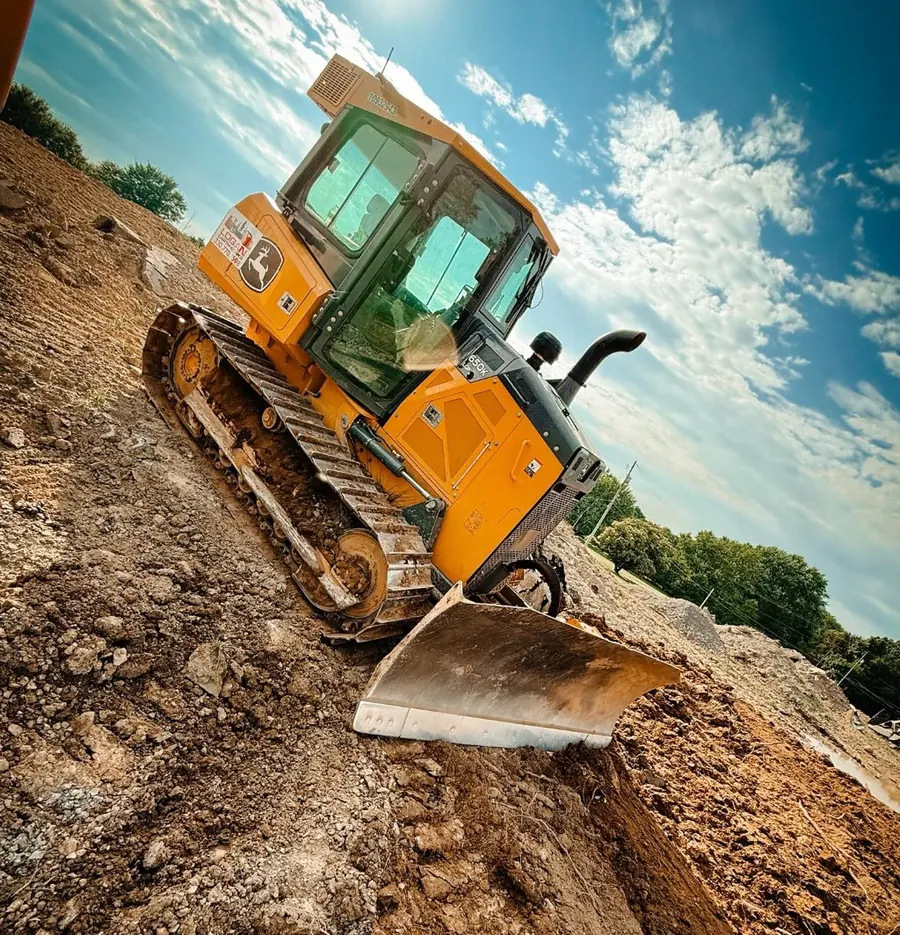
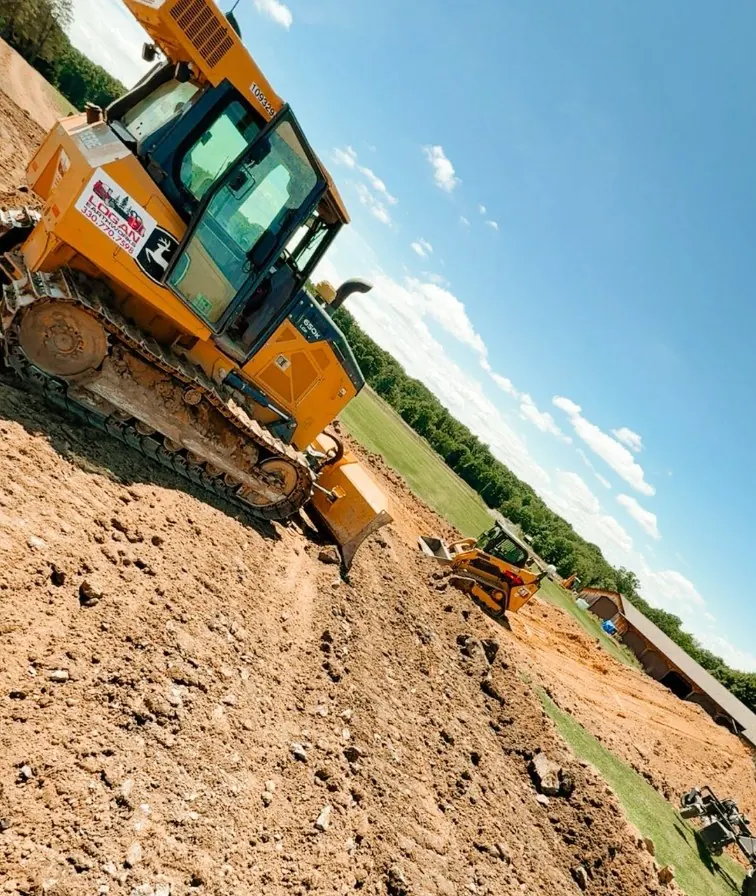
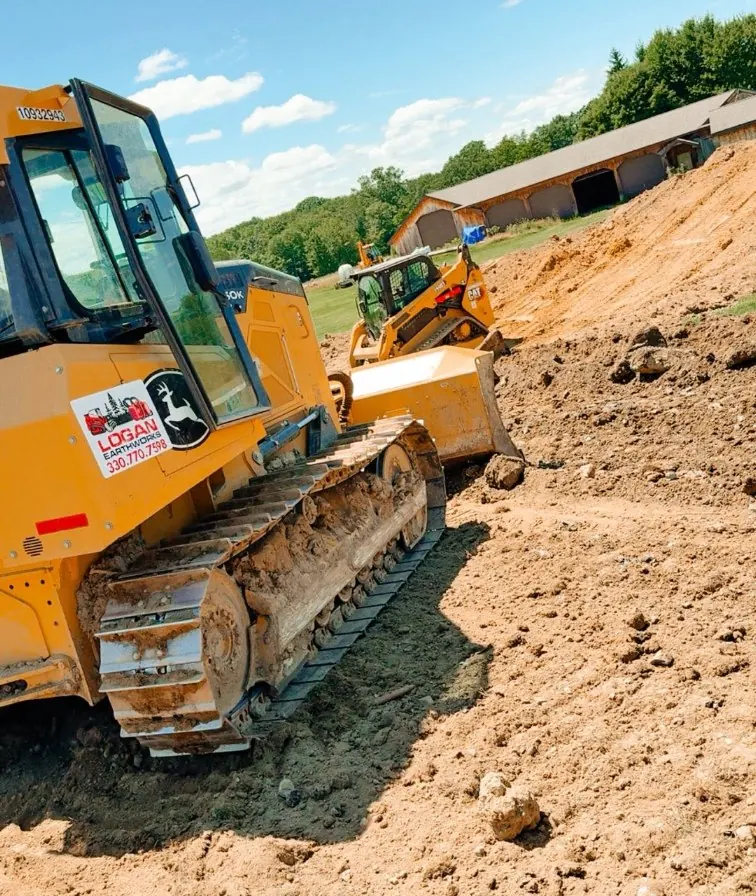
Logan Earthworks grades residential, farm and commercial ground across northeastern and eastern Ohio and western Pennsylvania, working out of Farmdale in Trumbull County. We run a dozer for the heavy cuts and long pushes and a compact track loader for finish work and tight spots near buildings. Jeff, the owner, looks at where the water comes from and where it can go before a blade touches the ground, because grading that ignores water is just rearranging dirt.
Our home ground makes grading matter more than it does in sandier country. The soils across much of northeast Ohio are heavy clay over glacial till, and water soaks into them slowly. Whatever does not run off sits. So yards and building sites here depend on surface slope to stay dry, and a small change in grade makes a big difference in how a property behaves in March and April. We set real fall into the ground, then check that it carries water to a place that can take it.
Grading and Leveling Work We Do
- Rough grading after clearing or excavation
- Final site grading around new construction
- Land leveling for fields, lots and yards
- Yard grading to move water off
- Building pad grading for slabs and barns
- Erosion control grading on slopes and banks
Rough Grading and Final Grading
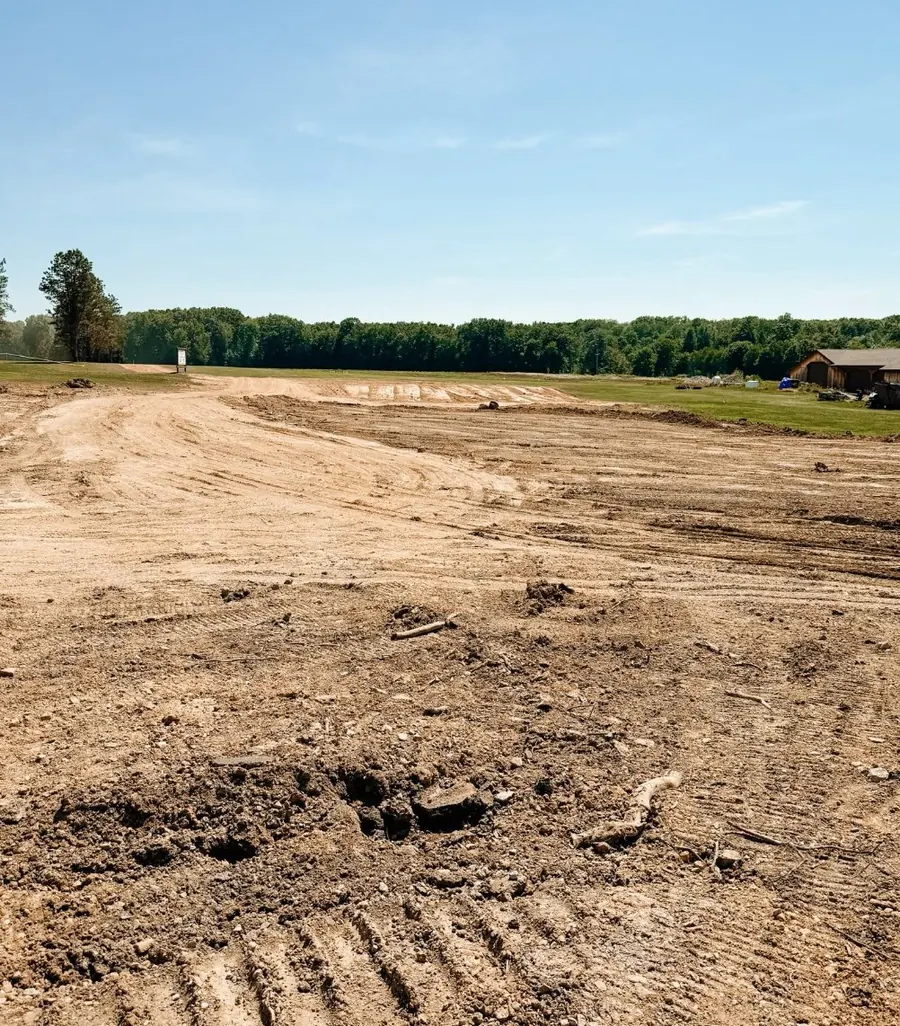
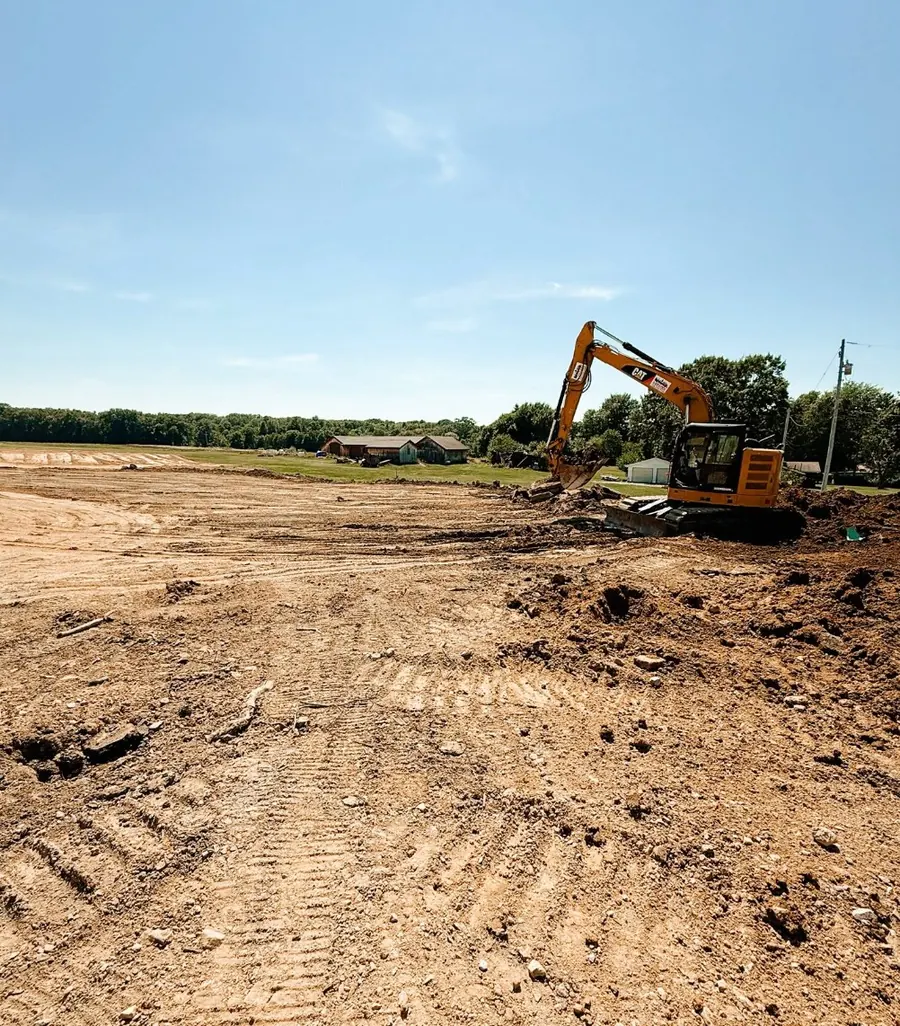
They are two different passes. Rough grading moves the bulk of the dirt: cutting high ground, filling low ground and setting the general shape and drainage of the site. It happens after clearing and before or during construction. Final grading comes at the end. The subsoil is trimmed to its finished shape, the stockpiled topsoil is spread back over it, and the surface is left smooth enough to seed. We do the grading and leave a clean seedbed that is ready for grass seed. Pads get their own treatment, covered on our building pads page.
Yard Grading and Lawn Leveling
Most yard calls are one of three things: water running toward the house, low spots that hold water, or a lumpy lawn left by old stumps, settled trenches or construction ruts. We strip the sod and topsoil where needed, reshape the subsoil so it falls away from the foundation and toward a swale or the road ditch, then put the topsoil back. A common building code rule of thumb is about six inches of fall in the first ten feet out from the house, though your local building department has the final say. Where slope alone cannot do it, drainage work picks up the rest.
Land Leveling for Fields, Lots and Building Areas
Leveling does not mean dead flat. Flat ground on clay is a pond. It means an even plane with a planned, gentle fall. We level and smooth ground for outbuildings, parking and equipment yards, lots being readied for sale, lawns going in after land clearing, and old farm ground cut up by ruts, dead furrows and tipped-over trees. The dozer makes the long passes and the track loader finishes. On bigger areas we balance the cut and the fill so dirt moves across the site and not onto a truck.
Erosion Control Grading on Slopes and Banks
Bare, steep dirt will not stay put through a northeast Ohio spring. Erosion control grading reshapes the slope so water slows down and spreads out before it can cut a channel. That can mean laying a bank back to a gentler angle, cutting a diversion swale across the top of a hill, building a berm to steer runoff, or putting the crown back on a washed lane so water sheds to the sides. For gullies that keep opening up, we look uphill for the source. County Soil and Water Conservation Districts are a good source of advice on erosion. Our guide to standing water, grading and drainage fixes explains the options.
What is the difference between rough grading and final grading?
Rough grading shapes the site in bulk: the cuts, the fills and the overall drainage. Final grading is the finish pass that trims the surface, spreads the topsoil and leaves it smooth and ready to seed. New builds need both. Many yard repairs are really a small rough grade followed by a careful final grade.
Will regrading my yard fix standing water?
Often it will, if the water has somewhere lower to go. Regrading gives the surface a steady fall so rain runs off before it soaks in and sits. If your yard is the low point of the neighborhood, or the water is coming up from below, grading alone will not cure it and you will need a drain, a swale or a catch basin as well. We sort out which during the site visit.
How much slope should a yard have away from the house?
Enough that water visibly moves away from the foundation on every side. A widely used building code guideline is roughly six inches of drop over the first ten feet. Past that, a gentle, steady fall toward a swale, ditch or storm inlet is plenty. Check with your local building department for the rule that applies to your address.
What is the best time of year to grade a yard in Ohio?
When the soil is dry enough to crumble, not smear. On our clay that usually means late spring through fall, with summer and early fall the most reliable. Grading wet clay packs it hard and leaves ruts. Early fall has a bonus: grass seed put down after final grading gets cool nights and fall rain to help it start.
How much does it cost to level or regrade a yard?
It depends on the area, how much dirt has to be cut or brought in, how close the work is to the house and how hard it is to get a machine in. Fixing one low spot is a small job. Reshaping a whole lot and spreading the topsoil back is a bigger one. We look at it, tell you what it needs and give a free estimate before any work starts.
How a Job Runs
Talk It Through
Call or send the form. Tell us where the ground is and what you want it to look like when we leave.
We Look at the Site
Jeff walks it with you: the growth, the slope, the wet spots, the way in and out for the machines.
A Straight Plan
You get a free estimate and a plain recommendation on the approach that fits the ground.
The Work Gets Done
We bring the right machine for the job and do the work the way we said we would.
Clean and Ready
We leave the site cleaned up and ready for the next step, whatever that is for you.
Grading Near You
Based in Farmdale, in Trumbull County, Ohio. Pick your town, or call and ask if we cover it.
More services
Gravel Driveways
New gravel drives, farm lanes and private roads, plus regrading, widening and resurfacing.
DetailsDrainage
French drains, swales, ditches and culverts that move water off your property.
DetailsStump Grinding
Stumps ground below ground level, from one in the yard to a whole cleared lot.
DetailsNeed Grading?
Call Jeff or send a few details. Estimates are free, and you get a straight answer on what the job takes.