
The best time to clear land in Northeast Ohio is late fall through winter, when the leaves are down, the ground is firm or frozen and machines leave the fewest ruts. Dry stretches in late summer and early fall work well too, and the season to avoid on most sites is the spring thaw, when our clay soils are soaked.
Why late fall and winter work so well
Once the leaves drop, an operator can see what he is cutting. Stumps, rocks, old wire, property pins and the trees you want kept all show up. The brush itself is lighter without leaves and sap. Most of all, cold firms the ground. Frozen soil carries a heavy tracked machine without rutting, so wet bottoms and soft field edges that are off limits the rest of the year can be worked. There are no leaves to hide a drop-off and no bees or poison ivy in full swing. For most clearing jobs, this is the easy season.
Why spring is the hard season
Much of Trumbull, Mahoning and Ashtabula counties is glacial till with a heavy clay subsoil that drains slowly. When the frost goes out and the spring rains come, that clay holds water like a sponge. Machines sink, tracks cut deep ruts, and the ruts have to be graded out later. Hauling logs or stone across a soft yard makes it worse. Some high, well-drained sites can be worked in spring without trouble. On low or flat ground it usually pays to wait a few weeks for the soil to firm up.
Summer: possible, with trade-offs
By early summer the ground has usually dried and firmed, and long days give plenty of working time. The trade-off is growth. Everything is in full leaf, so the operator sees less, the brush is heavier and greener, and vines are at their worst. Heat is hard on machines and people. A dry spell in late summer is a good window, mainly for wet sites that are only firm for a few weeks a year. Dust can be a bother near houses, so tell your neighbors before we start.
When to mulch brush and invasives
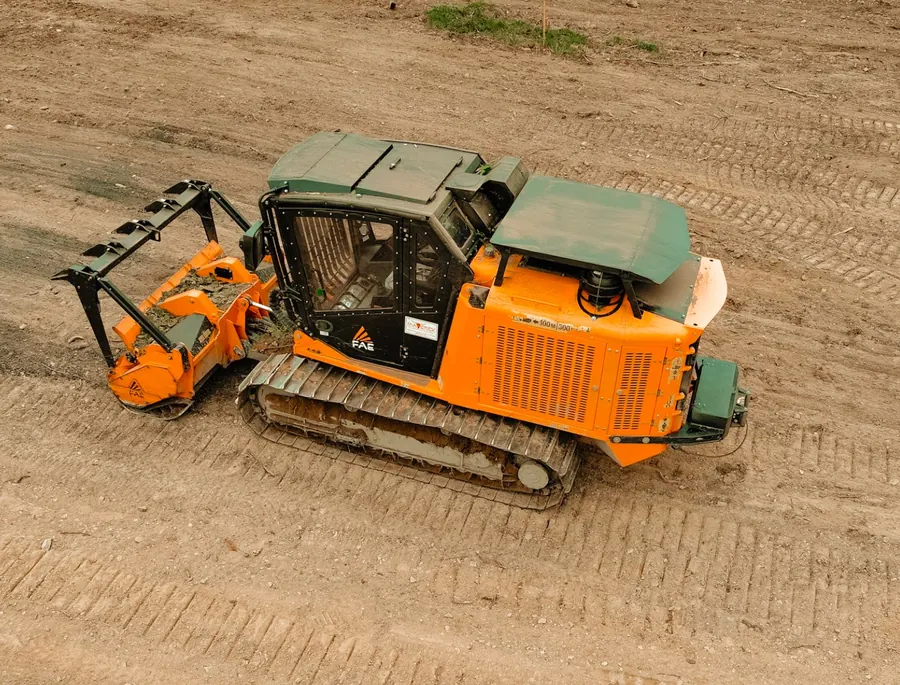
A forestry mulcher can work in any month the ground will carry it, so pick the timing to suit the goal. Winter gives the cleanest cut and the least soil disturbance. Late summer catches shrubs such as autumn olive before the berries ripen and drop, which keeps a season of seed off the ground. Whenever you cut, the roots will resprout the following spring, so plan the follow-up at the same time. Our invasive brush removal page covers that, and the forestry mulching page explains the machine.
If you are building, clear a season ahead
Clearing for a house or a barn is easier to schedule when it is not the week before the foundation crew arrives. Clear and rough grade a season ahead and you get to watch the site through some hard rains, find the wet spots and fix the drainage before anything is poured. It also keeps you clear of the spring rush, when every builder wants dirt work done at once. One more timing note: brush piles cannot be burned on your own schedule. Ohio limits daytime fires in spring and fall, as our open burning guide explains.
Projects with permits may have a tree-cutting window
Some larger projects that go through state or federal environmental review are asked to cut trees only in the cold months. Guidance from the Ohio Division of Wildlife and the U.S. Fish and Wildlife Service recommends October 1 through March 31 for tree clearing near places where protected bats have been recorded, since the bats roost in trees in summer. Whether that applies to your job is a question for the agency. If your project has permits, a wetland review or public money behind it, ask your engineer or the agency before you set a clearing date.
Snow country and hunting ground
Winter is not the same everywhere in our area. Geauga and Ashtabula counties sit in the Lake Erie snowbelt, and deep snow can hide stumps and rocks and slow a job that would be simple on bare frozen ground a county south. We plan around it. Hunters have their own calendar: trails, shooting lanes and food plot openings are easier to cut in late winter or summer, well ahead of the fall seasons, so the woods have time to settle. See hunting land, trails and shooting lanes for how we lay those out.
Common Questions
When should you forestry mulch in Northeast Ohio?
Any time the ground is firm enough to carry the machine. Late fall and winter are easiest: the leaves are off, the soil is frozen or firm, and there is little rutting. Late summer is a good second choice, and it catches seed-bearing shrubs before the berries drop. Early spring, during the thaw, is the time most likely to be too wet.
Can land be cleared in winter when the ground is frozen?
Yes, and it is often the cleanest time to do it. Frozen ground carries heavy machines without rutting, so soft spots can be reached that are too wet the rest of the year. Brush and trees are cleared the same way as in any season. Digging stumps and grading frozen soil is harder, so that part may be finished when the ground thaws and dries.
Is spring a bad time to clear land in Trumbull County?
It depends on the site. Trumbull County has a lot of slow-draining clay, and during the spring thaw low and flat ground gets too soft for machines without tearing it up. Higher, better-drained ground can often be worked. Jeff will look at your property and tell you honestly if it should wait a few weeks.
What to Do Next
Thinking about clearing? Call Jeff at (330) 625-5754 and talk through the season that suits your ground. The estimate is free and comes after a look at the site. We clear land close to home across Ashtabula County and around Middlefield.