
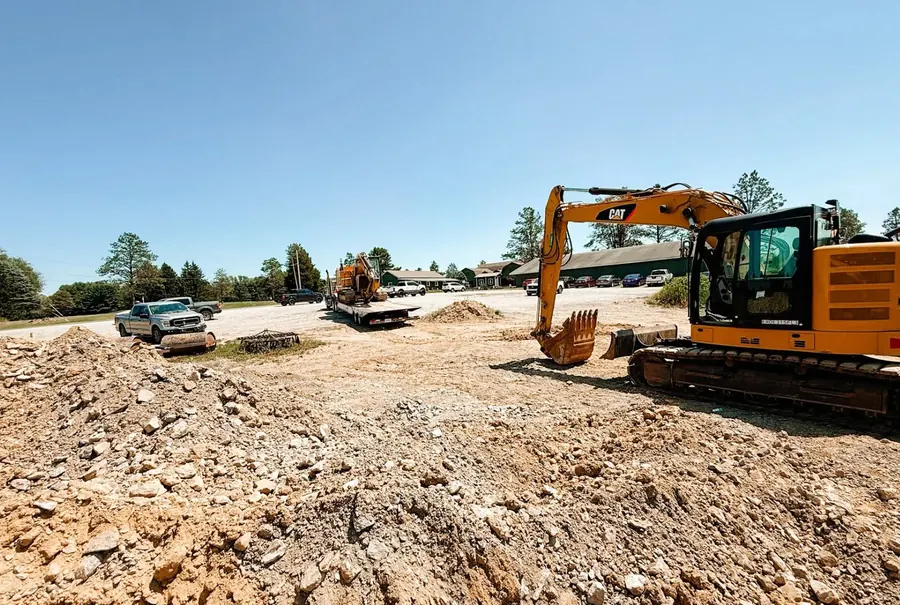
French Drain Installation & Yard Drainage
A yard that squishes for a week after every rain is not something you have to live with. We find where the water comes from, then move it with a French drain, a swale, regrading, or a mix of the three.
French Drains, Start to Finish
You know the spot. The mower leaves ruts there until July. The dog comes in with mud to the elbows. Water stands against the back of the garage after a hard rain, and the low corner by the neighbor's fence smells like a swamp by August. Heavy clay is common across northeast Ohio, and water moves through clay slowly. If it has nowhere to run on top, it sits. Adding topsoil or seed to the wet spot does nothing, because the water is still coming.
Jeff starts by reading the yard. Where does the water come from: your roof, the hill behind you, the road, a spring? Where can it go: a ditch, a swale, a low area at the back of the lot? Once those two answers are clear, the fix usually is too. Sometimes it is a French drain. Sometimes the yard only needs to be regraded so it falls the right way. Often it is a shallow swale to catch the water and a pipe to carry it the last stretch.
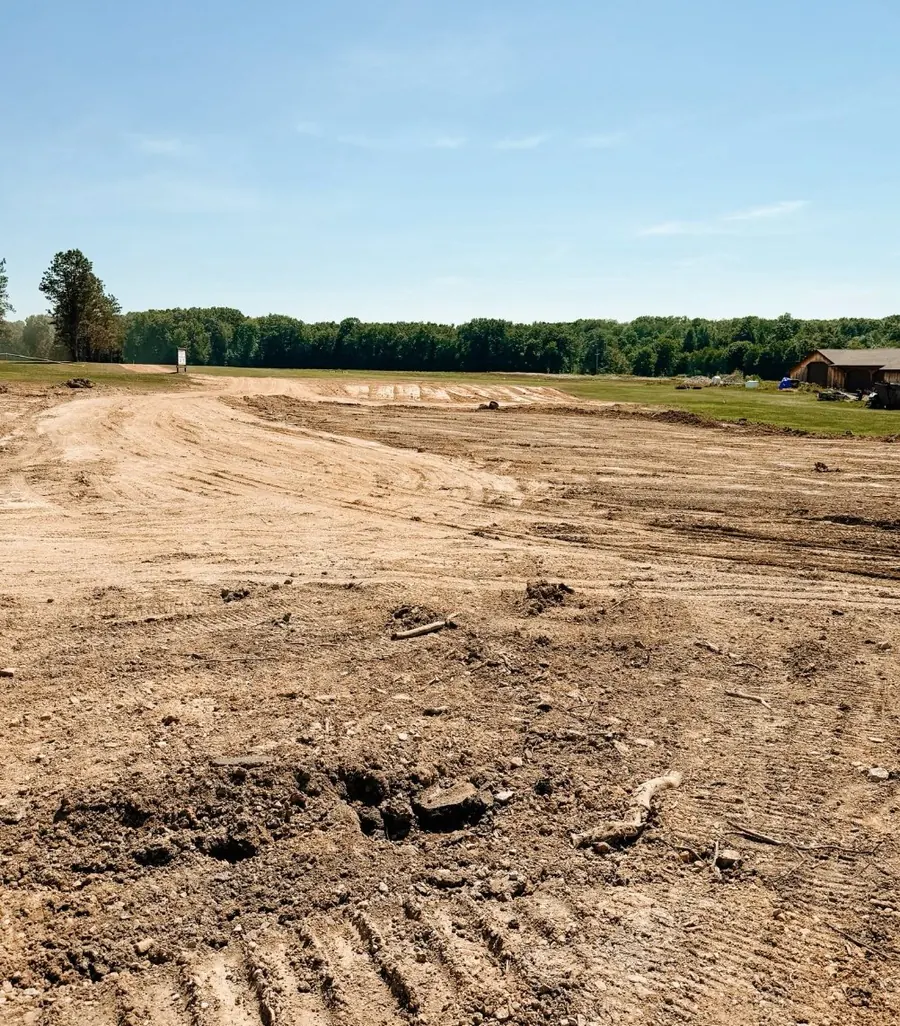
When the work is done you have ground that sheds water, a trench or swale that is graded smooth, and a yard you can mow without sinking. This page covers the home side of our drainage solutions. If you want to understand the causes first, read why yards hold standing water. Then call Jeff at (330) 625-5754 and tell him where it stays wet.
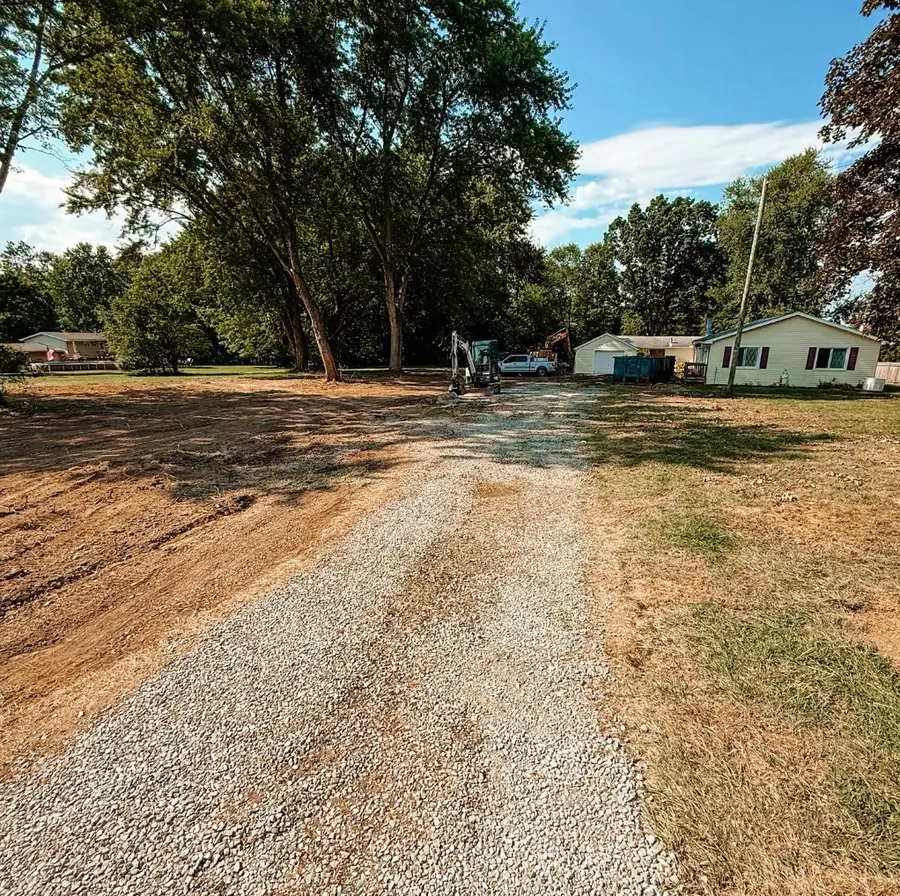
Yard Drainage Work We Do
- French drains with pipe, stone and fabric
- Swales shaped to carry surface water
- Yards regraded to fall away from buildings
- Low spots filled and leveled
- Outlets run to daylight or a ditch
- Trenches backfilled, graded and ready to seed
Find where the water comes from first
Most wet yards have one of four causes. The ground is flat or tilts toward the house. Water runs in from higher ground next door or from the road. Downspouts dump roof water right where the trouble is. Or the water table is high and the soil is tight. Each one has a different fix, and a French drain is the answer to only some of them. If roof water is the source, where the downspouts empty is the first thing to look at. On the ground, we handle the grade, the swales and the buried drains. Your county Soil and Water Conservation District is also a good place to ask about drainage. In Trumbull County that office is in Cortland.
What a French drain is and when it works
A French drain is a trench with a perforated pipe in the bottom, filled with clean stone and wrapped in fabric to keep the soil out. Water finds the stone, drops into the pipe and runs downhill to an outlet. It works when it sits where the water is, has steady fall along its whole length, and ends somewhere lower that can take the flow. It fails when it is laid flat, has no outlet, or is filled with dirt and not stone. In clay it has to be placed to catch water moving across the top of the ground and along the clay, since little soaks straight down.
When regrading or a swale beats a pipe
Pipe is not always the answer. If the yard slopes toward the house, no drain will keep up with a storm, and the real fix is regrading so the ground falls away from the walls. If water crosses your lot from uphill, a wide, shallow grass swale will carry far more than a buried pipe and never clogs. You can mow right through one. We often build both: a swale to gather the surface water and a French drain under the wettest stretch. Wondering which of these your yard needs? That gets sorted out when Jeff walks it with you.
Who do I call for a wet yard: a landscaper, a plumber or an excavator?
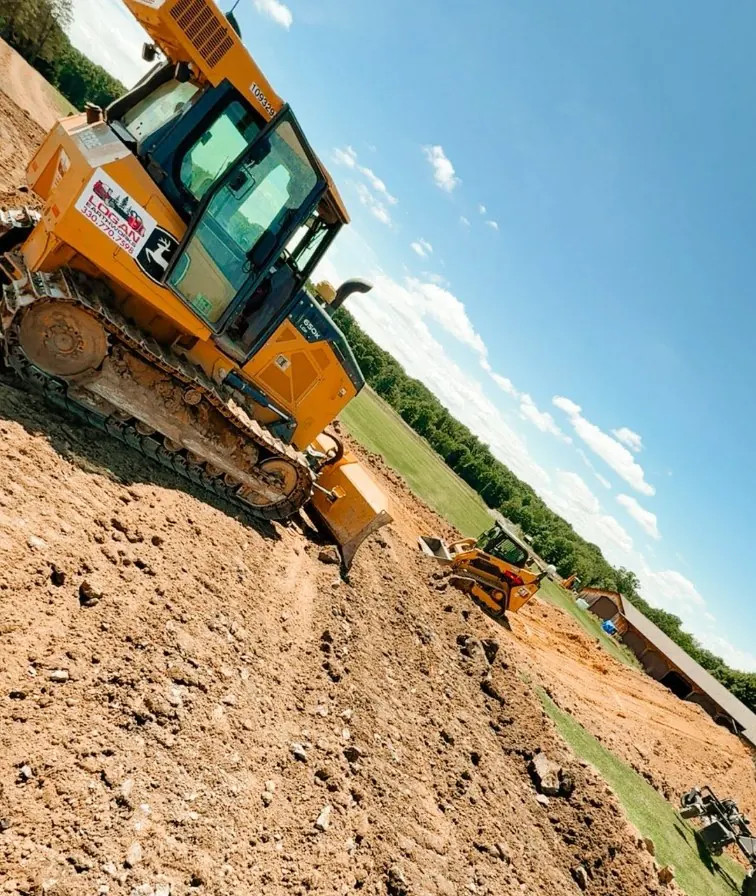
For water standing on or running across the ground, call an excavating contractor who does grading and drainage. Moving water is dirt work: slope, swales, trenches, pipe and stone, and it takes machines to do it right. If you are not sure what kind of water problem you have, call Jeff and describe it, and he will talk it through with you.
Do French drains work in heavy clay soil?
They can, if they are built for it. Water barely soaks down through clay, so the drain has to sit where water runs along the surface or collects, with plenty of clean stone and good fall to an outlet. A drain buried in clay with no outlet just becomes a long underground bathtub. In some clay yards, regrading and a swale do more than pipe.
Where does the water from a French drain go?
To a lower spot that can take it: daylight at the back of the lot, a swale, or a ditch. It must not be sent onto a neighbor or into a septic system. Tying into a road ditch or storm drain is up to whoever owns it, such as the township, the county engineer or the city, so ask them before the pipe is laid. We plan the outlet before we plan anything else.
What does it take to put drainage in a yard, and what drives the cost?
The length of trench or swale, how deep it has to go to get fall, how much stone and pipe it needs, how far the outlet is, and how easily a machine can reach the back yard. Fences, patios, trees and buried lines add time. Jeff looks at the yard and gives a free estimate. Our drainage cost guide walks through each piece.
My neighbor's yard drains onto mine. What can be done on my side?
On your own ground, quite a bit. A swale or a French drain along that side can catch the water and carry it to a safe outlet before it reaches your lawn or buildings. What your neighbor is or is not allowed to do under Ohio law is a legal question for an attorney. The county Soil and Water Conservation District is also a good first call for drainage questions between neighbors.
How a Job Runs
Talk It Through
Call or send the form. Tell us where the ground is and what you want it to look like when we leave.
We Look at the Site
Jeff walks it with you: the growth, the slope, the wet spots, the way in and out for the machines.
A Straight Plan
You get a free estimate and a plain recommendation on the approach that fits the ground.
The Work Gets Done
We bring the right machine for the job and do the work the way we said we would.
Clean and Ready
We leave the site cleaned up and ready for the next step, whatever that is for you.
French Drains Near You
Based in Farmdale, in Trumbull County, Ohio. Pick your town, or call and ask if we cover it.
Drainage pages for your town
More services
Need French Drains?
Call Jeff or send a few details. Estimates are free, and you get a straight answer on what the job takes.